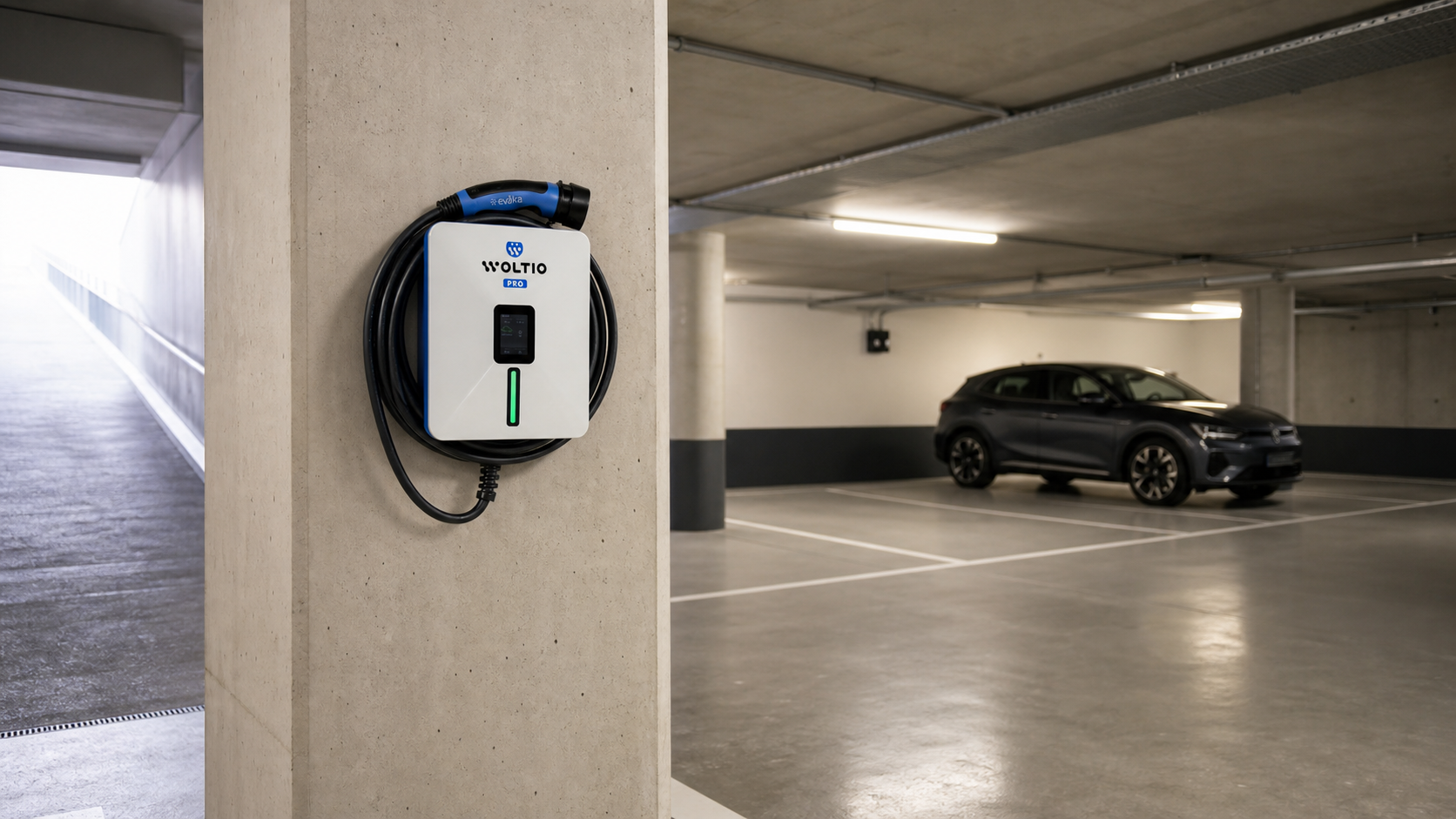
Electric mobility is already part of building design. Just as ventilation or telecommunications are planned, charging infrastructure must be considered from the outset.
The European Directive on the energy performance of buildings, known as EPBD by its English acronym, reinforces this idea. Its aim is for new buildings and those undergoing certain renovations to be prepared for increasingly electrified mobility. This involves installing charging points in some cases and making other spaces ready to incorporate them without complex construction work.
However, this does not mean that every new building must include a charger. Requirements vary depending on the use of the property, the number of spaces and the relationship between the parking area and the building.
Directive (EU) 2024/1275 establishes the European framework for improving energy efficiency and moving towards a decarbonised building stock. It entered into force on 28 May 2024 and set 29 May 2026 as the general deadline for Member States to incorporate its new provisions into national law.
Article 14 focuses on infrastructure for sustainable mobility. The EPBD aims to anticipate demand from the building design stage: some parking spaces will have equipment installed, while the rest may have pre-cabling or conduits for future expansions.
The directive distinguishes between residential buildings, non-residential properties and offices. The thresholds apply when the car park is inside the building or adjacent to it under the conditions set out in the regulation.
For new residential buildings with more than three parking spaces, the EPBD requires at least one charging point. It also requires pre-cabling for a minimum of 50% of the spaces and conduits for the remaining ones.
This does not mean installing a charger at every space, but rather creating a technical foundation that makes it possible to expand the infrastructure as the number of electric vehicles grows.
For new non-residential buildings with more than five spaces, such as retail premises, educational centres or hotels, the benchmark is one charging point for every five spaces. Pre-cabling is also required for at least half of the car park and conduits for the remaining spaces.
For office buildings, the criterion is more demanding: when there are more than five spaces, one charging point is required for every two spaces. Vehicles remain parked for much of the day, which supports workplace charging.
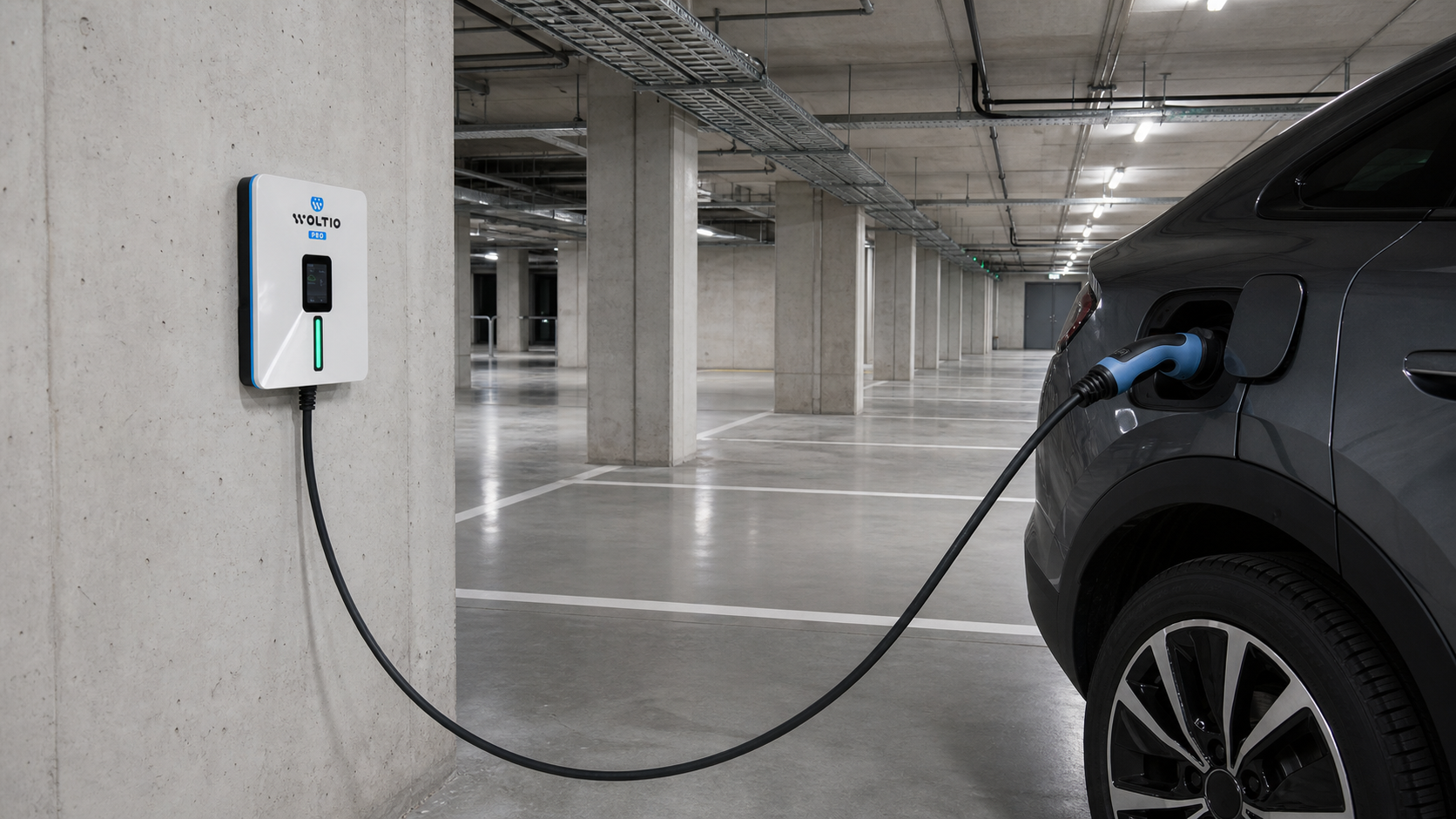
A charging point is operational equipment. Pre-cabling includes the cables required to add one later. A conduit reserves the route through empty ducts through which those cables will run.
The difference is important when calculating the actual scope of the project. A conduit does not make the parking space operational, but it avoids having to open walls, ceilings or floors when expanding.
The EPBD also requires the design to allow the planned charging points to be used simultaneously and efficiently. Therefore, the available power, protective devices, circuit distribution and potential load management must be considered as a whole.
A European directive sets outcomes that Member States must incorporate into their legislation. Therefore, the requirements applicable to a specific project must always be checked against the Spanish regulations in force and the licence conditions.
Spain already has section HE 6 of the Technical Building Code, introduced through Royal Decree 450/2022. This regulation requires cable routing systems for 100% of parking spaces in private residential buildings. For other uses, it establishes conduits for at least 20% of spaces and, as a general rule, one charging station for every 40 spaces or fraction thereof.
The transposition of the EPBD must incorporate its new minimum requirements into this national framework. Each installation must also comply with the Low Voltage Electrotechnical Regulation and ITC-BT-52. You can find further context in this guide on charging point regulations in homeowners’ associations.
Planning infrastructure during construction makes it possible to coordinate electrical panels, service shafts, ventilation and cable routes. It is easier to address these needs on the plans than to intervene later in a completed car park.
It also makes it easier to design a scalable installation. Not every parking space will need to charge at maximum power at the same time, but the building must be able to accommodate new users without putting its electrical capacity at risk. Analysing usage profiles and schedules helps size the equipment and assess load management systems.
In offices, hotels or commercial car parks, it will also be necessary to decide how users will be identified, how consumption will be measured and whether billing will be provided. The guide on how to install charging points in a company’s car park provides further details on these aspects.
The EPBD makes charging a matter of building planning. The change is not only about installing chargers, but about creating infrastructure that can grow in an organised way.
Developers, architects, engineering firms and owners will need to review the use of the property, the number of spaces, the available power and future expansion from the earliest stages. A properly sized solution will make it possible to comply with regulations, avoid unnecessary work and adapt the car park to the actual evolution of electric vehicles.