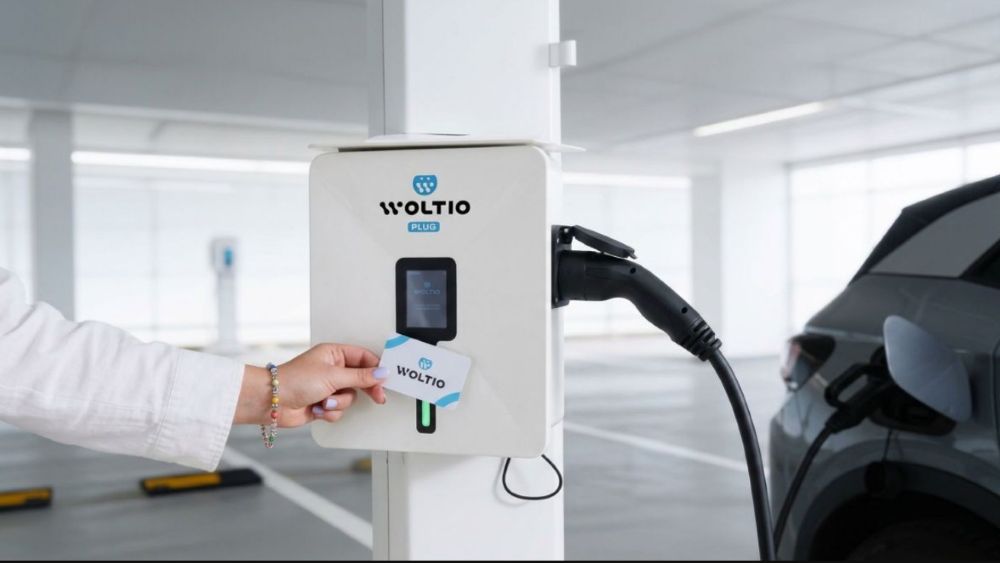
It is very common to use a car to get to work. And with the rise of EVs, having a charging point in the parking lot has become a priority for many companies.
Installing electric car chargers in a business environment not only improves convenience for employees and customers: it also helps strengthen the company’s sustainability image and prepares it for future mobility needs, taking into account a gradual increase in electric cars among the workforce.
However, before starting the installation, it is important to analyze several technical and operational factors. Choosing the right chargers, planning the infrastructure, and having suitable management systems will make a difference in the day-to-day operation of the installation.
Before installing charging points in a company parking lot, it is advisable to carry out a preliminary study of actual usage needs. This phase is key to avoiding future problems and ensuring that the installation is efficient and scalable.
One of the first aspects to review is the electrical power available at the company’s facilities.
Not all buildings have enough capacity to run several chargers at the same time. That is why it is important to analyze current energy consumption and calculate how much additional power will be needed.
It is also worth assessing the type of charging users will need. Installing chargers for employees who leave their cars parked throughout the working day is not the same as installing them for fleet vehicles that require faster charging.
In many cases, smart chargers make it possible to dynamically manage the available power to optimize energy consumption and prevent overloads in the installation.
In addition, it is advisable to think in the medium and long term. Although only a few charging points may be installed initially, demand will probably increase over time.
Another essential aspect is defining who will use the chargers and how many spaces will be enabled. Some companies install charging points only for corporate vehicles. Others also allow access for employees, customers, or visitors.
Each case requires different planning. For example, when there are different types of users, it is usually advisable to have identification and access control systems.
It is also important to study vehicle turnover and average parking time. This will help determine how many chargers are really needed and what type of configuration is most suitable.
Good initial planning avoids unnecessary costs and facilitates future expansion of the charging infrastructure.
There are currently different types of chargers for companies, and the choice will mainly depend on usage needs and the type of vehicles that will use the installation.
AC chargers are the most common in corporate parking lots. They are usually used for semi-fast or destination charging, especially when vehicles remain parked for several hours.
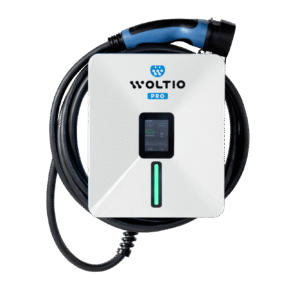
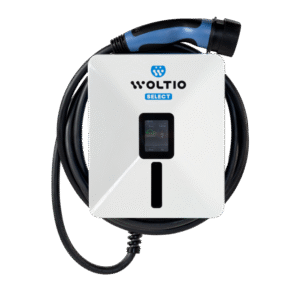
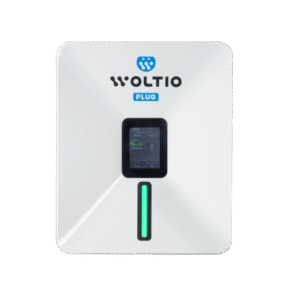
Within this category, smart solutions such as the WOLTIO SELECT, WOLTIO PRO, or WOLTIO PLUS chargers stand out, designed for home use, and WOLTIO PLUG, the brand’s smart alternative for the tertiary sector, allowing users to enjoy safe and hassle-free charging. All of them are compatible with the European Type 2 standard and allow charging to be managed efficiently through advanced connectivity.
On the other hand, companies with high vehicle turnover or professional fleets may need fast DC chargers. This type of equipment can considerably reduce charging times, although it requires a more demanding electrical infrastructure.
There are also systems with specific features for business environments, such as:
Dynamic load balancing.
Remote management.
User control.
Energy monitoring.
Integration with management platforms.
Schedule programming.
Connectivity has become a key element in this type of installation. Thanks to mobile applications such as the WOLTIO app, users can monitor and control different charging parameters from anywhere.
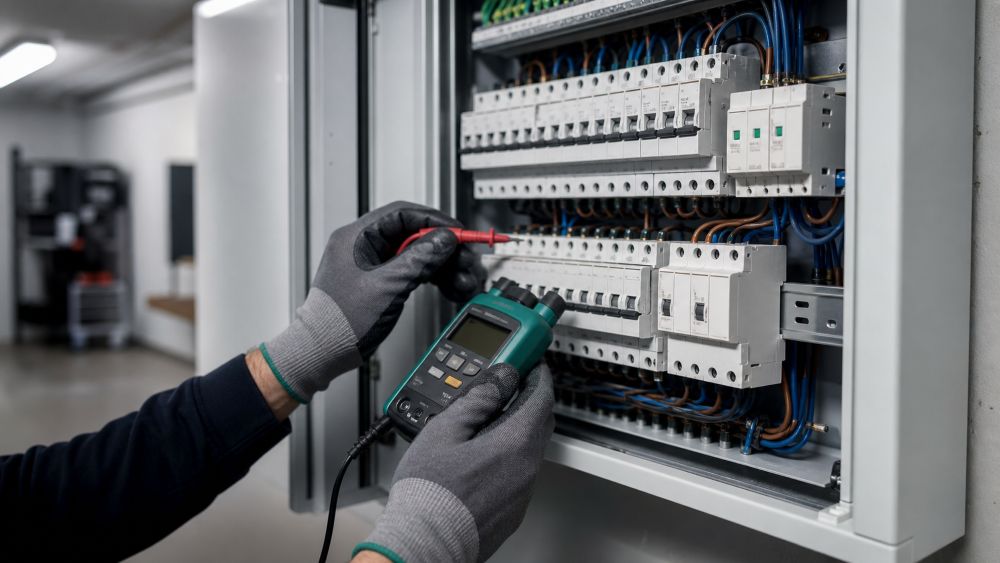
The installation of charging points in companies should always be carried out by specialized professionals. In addition to complying with current regulations, a proper installation ensures the safety and correct operation of the entire system.
The process usually begins with a technical visit to analyze the characteristics of the parking lot and the existing electrical installation.
A feasibility study is then carried out, defining aspects such as:
Number of chargers.
Location of the spaces.
Required power.
Type of conduits.
Electrical protection systems.
Energy management configuration.
Once the project has been approved, the physical installation phase begins. At this stage, the conduits, electrical wiring, and placement of the electric car chargers for companies are carried out.
Software and connectivity configurations are then performed to ensure that all devices work correctly.
Finally, operational and safety tests are carried out before putting the installation into service.
In many cases, companies choose to design infrastructure prepared for future expansion, even if not all the planned chargers are installed initially.

Managing charging points is one of the most important aspects of business installations.
When several users use the same chargers, it is essential to have tools that allow consumption to be monitored and access to be controlled.
Today’s smart chargers include advanced features that make this task much easier. Thanks to connectivity and management platforms, it is possible to:
Authorize users.
Monitor consumption.
Program schedules.
Limit power.
Obtain usage reports.
Detect incidents remotely.
In addition, some companies use identification systems through RFID cards or mobile applications to manage who can use each charging point.
Energy monitoring also helps optimize electricity costs and avoid unnecessary consumption during peak hours.
Another particularly interesting feature is dynamic load balancing. This system automatically distributes the available power among several chargers to prevent overloads and improve energy efficiency.
Having a good management platform greatly simplifies the day-to-day administration of the charging infrastructure.
One of the most common mistakes is installing fewer chargers than needed by focusing only on current demand.
Electric mobility continues to grow rapidly, and many companies end up expanding their infrastructure a few years after the first installation. That is why it is advisable to design a solution that is ready to grow.
Another common mistake is failing to properly analyze the available power. An incorrectly sized installation can cause electrical problems and limit the operation of the chargers.
It is also common to prioritize only the price of the charger without considering other important aspects such as connectivity, software quality, or future compatibility. In business environments, smart management and remote control are essential to ensure efficient use of the installation.
In addition, some companies do not take the user experience into account. Aspects such as ease of use, connection stability, or access through a mobile app can have a major impact on employee and customer satisfaction.
Finally, another mistake, and perhaps the most important one, is not working with specialized installers. Installing charging points requires specific technical knowledge and must comply with all safety requirements and current regulations. There is no point in choosing the best equipment if it is not going to be installed following all safety and efficiency measures.