Electric mobility continues to grow across Europe. More and more electric vehicles are on the road and, with this, the need for an accessible, clear and easy-to-use charging network is also increasing.
That is why it is useful to know what the AFIR Regulation is, a European regulation that will shape the future of charging infrastructure over the coming years.
Although many people are still unaware of its implications, the truth is that AFIR directly affects businesses, car parks, hotels, shopping centres and any space that offers charging points for electric cars. It is not only about changes to certain technical requirements: it also changes the way users interact with chargers.
AFIR stands for “Alternative Fuels Infrastructure Regulation”. It is a regulation approved by the European Union whose objective is to promote sustainable mobility through a more uniform, accessible and transparent charging network across all Member States.
The main aim is to make the experience easier for any electric vehicle driver, regardless of the country they are in. To achieve this, the regulation establishes a series of minimum requirements related to the installation, access, payment and information provided at charging points.
This particularly affects companies and businesses that have chargers open to the public. Hotels, car parks, restaurants, service stations and shopping centres will have to adapt their solutions to comply with certain standards.
In addition, AFIR focuses not only on the number of chargers available, but also on the user experience. The goal is for charging an electric car to be a simple, intuitive and transparent process.
One of the most important changes introduced by the AFIR Regulation concerns ease of use. The regulation seeks to remove barriers and simplify access to public charging, which means changes must be made both at a technological level and in the way the service is managed.
One of the key points of the regulation is that users must be able to pay for charging simply and directly, without complex steps or the need to download a specific app.
At many current charging points, it is still necessary to download a specific application, create an account or register in advance in order to start charging. AFIR aims to reduce these limitations and encourage more universal payment methods.
For this reason, chargers open to the public must provide accessible payment systems, especially at fast-charging stations. This may include payments by bank card, contactless or similar systems.
For businesses and hotels, this means the need to have solutions that are ready to integrate payments conveniently and securely.
Another important aspect of the AFIR Regulation is transparency, as users must be able to easily consult information related to:
The price of charging.
The cost per kWh.
Charger availability.
The operational status of the point.
Charging power.
The idea is to avoid confusing situations and improve driver confidence during the charging process.
In addition, the regulation also encourages charging points to share real-time information with platforms and navigation systems, making it easier to locate available chargers, which has forced many facilities to incorporate smart management systems and advanced connectivity.

The AFIR Regulation can have a significant impact on many businesses that already offer electric charging or are considering installing it soon.
In some cases, it will be necessary to update old equipment. In others, it will be enough to adapt the software or improve payment management and monitoring.
For hotels, for example, having chargers compatible with the new requirements can become an important added value for their guests. More and more travellers are looking for accommodation with accessible and easy-to-use charging points.
Something similar is happening in public and private car parks. The user experience will become increasingly important, especially in urban environments where charging is beginning to form part of standard services.
Companies will also need to pay attention to this regulation if they have parking areas for employees, electric fleets or customers.
In addition, AFIR may directly influence future aid, subsidies or administrative requirements related to the installation of charging infrastructure.
Therefore, anticipating these changes can help avoid additional costs later on.
Before installing new chargers or modernising existing infrastructure, it is advisable to analyse several aspects related to the AFIR Regulation.
One of the first points is to check whether the equipment can integrate payment systems compatible with the new requirements.
It is also important to review:
Charger connectivity.
Compatibility with remote management.
Whether software updates are available.
Integration with monitoring platforms.
Whether it is able to display transparent information to the user.
Many companies are opting for scalable solutions so they can increase the number of chargers in the future without having to replace the entire installation, a great way to get ahead of potential developments that may end up being implemented later on.
Indeed, it is becoming clear that having smart chargers prepared for future updates is especially advisable in a context where regulations on the use of these charging stations are being adjusted at a rapid pace.
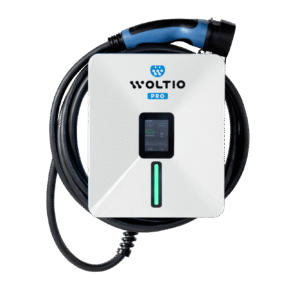
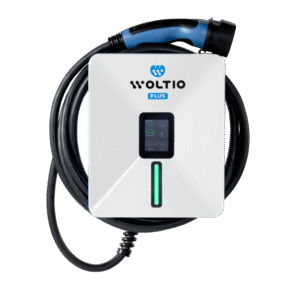
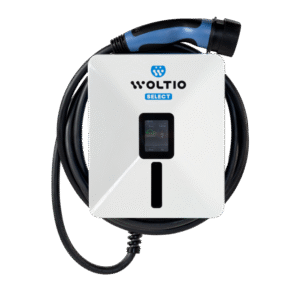
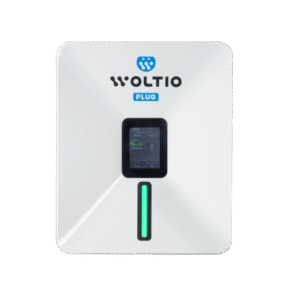
The WOLTIO charger range is designed precisely to adapt to the current and future needs of electric mobility. Our company’s electric car chargers for businesses comply with the provisions of the AFIR Regulation, so choosing a smart WOLTIO PLUG charger, designed for intensive use in the tertiary sector, is the best way to get ahead of the future.
The evolution of European regulations shows that electric charging will become increasingly smart, connected and focused on the user experience. That is why installing basic chargers without management capabilities may fall short in just a few years.
Companies need solutions capable of adapting to new technical requirements, payment systems and energy management platforms.
Having chargers prepared for monitoring, remote control and user management makes it possible to optimise the operation of the infrastructure and improve the service provided. And in environments such as hotels, car parks or companies, the ability to control access, view consumption or manage payments can be key to ensuring efficient operations.