When choosing a charging point, it is common to first consider the equipment’s maximum power. However, it is important to first determine whether the installation is single-phase or three-phase and what power the vehicle can accept.
A three-phase installation can offer more power, but it does not always enable faster charging or prove necessary for everyday use. The decision depends on the car, the distance travelled, the time available for charging and the electrical characteristics of the property.
A single-phase installation uses one phase and a neutral conductor, and typically operates at 230 V. It is the most common configuration in homes and provides sufficient charging power for most daily journeys.
A three-phase installation distributes energy across three phases. At low voltage, it normally operates at 230/400 V and can achieve higher power levels. It is common in businesses, workshops and properties with high electrical demand, although it is also found in some homes.
Having three phases does not mean that all the power is available for the car. The circuit design, contracted power, simultaneous consumption and the vehicle’s own capacity determine the final result.
In a single-phase installation, a common benchmark for dedicated charging is 7.4 kW at 32 A. Lower power levels can also be configured, for example when the installation has less available capacity or the user does not need to recover as much energy overnight.
In three-phase installations, common AC power levels are 11 kW at 16 A per phase and 22 kW at 32 A per phase. The effective power will always be the lowest of what the charging point offers, what the car accepts and what the building can supply.
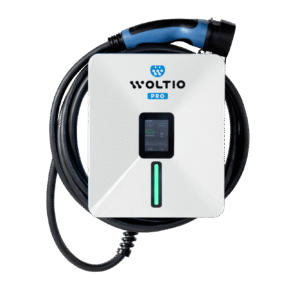
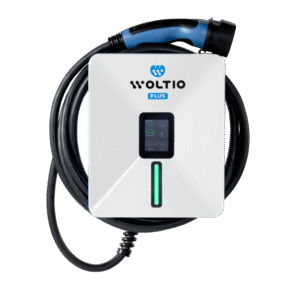
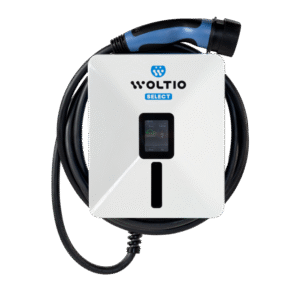
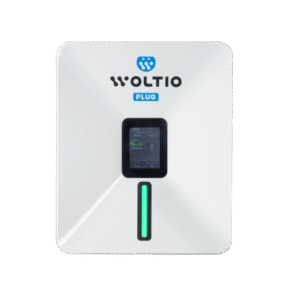
For this reason, it is not enough to choose the equipment that advertises the most kilowatts. If you want to review the available options according to the type of supply and intended use, you can view the range of electric car chargers.
For many private users, charging during the hours when the car remains parked makes it possible to recover the daily energy used. It is not necessary to fully charge the battery from zero every night, but rather to replace the kilometres driven.
Single-phase power is usually a good fit when:
The vehicle remains in the garage for several hours, especially overnight.
Moderate distances are travelled every day.
Only one car is regularly charged.
The vehicle’s onboard charger accepts a maximum single-phase power level that is similar or lower.
The home can manage charging without exceeding the available power.
In these cases, switching to three-phase power solely to reduce charging time by a few hours may not be worthwhile. A power management system can adapt the current to household consumption and make better use of the existing supply.
Three-phase power makes sense when there is a real need to charge more energy in less time and the vehicle can take advantage of it. It may be suitable for cars with large batteries, high daily mileage or short charging windows.
It may also be suitable for businesses, accommodation facilities, fleets or car parks with several charging points. Distributing loads across phases makes it easier to create scalable infrastructure, provided that simultaneity and available power are assessed.
In a home, it may be considered if a three-phase supply already exists or if there are other significant loads, such as air conditioning, aerothermal systems or high-power equipment. Even so, its suitability should be confirmed through a load calculation, not solely by adding up the appliances’ rated power.
The vehicle has an onboard charger that converts alternating current into direct current for the battery. This component sets the limit. If the car accepts 7.4 kW, connecting it to an 11 or 22 kW three-phase charging point will not make it exceed 7.4 kW.
Some models accept 11 kW three-phase charging; others can reach 22 kW, while many plug-in hybrids remain below these levels. The vehicle’s technical specifications should be reviewed before choosing the installation and charging point. It is also advisable to check whether the maximum power changes depending on the version or equipment.
The change may require adapting the service connection or the connection installation, modifying the electrical panel, replacing protections and wiring, checking the meter and completing procedures with the electricity company.
In addition to the cost of the work, it is necessary to assess the power that will need to be contracted. In a three-phase installation, poor distribution between phases can cause disconnections even if total consumption appears manageable. Therefore, the installation must be calculated and carried out by a qualified professional in accordance with the Low Voltage Electrotechnical Regulations and ITC-BT-52.
Before deciding, it is advisable to gather four pieces of information: the vehicle’s maximum AC power, the energy that needs to be recovered each day, the hours available for charging and the actual capacity of the electrical installation. It is also important to consider whether there will be a second car or new loads in the coming years.
With this information, it is possible to determine whether optimising the existing single-phase installation is sufficient or whether three-phase power will provide a useful advantage. The guide to comparing WOLTIO charger models helps match power, supply type and usage requirements.
Ultimately, the best installation is not the one that offers the most power, but the one that allows charging within the available time without paying for capacity that will not be used. Assessing the vehicle, building and mobility habits avoids unnecessary investments and leaves room for future needs.