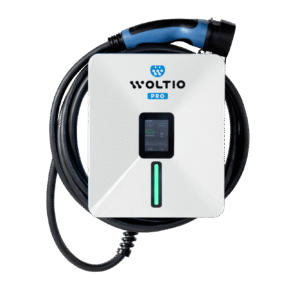
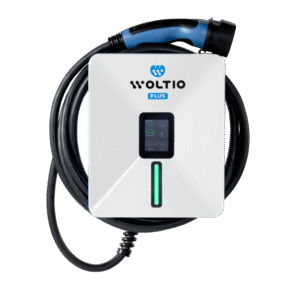
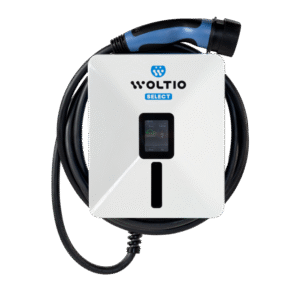
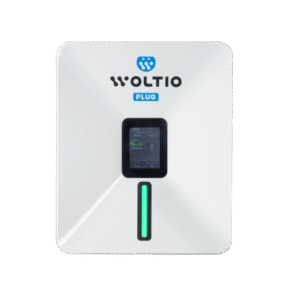
It is increasingly common for those who have an electric car to also have a charging point in their second home. Whether it is a house on the beach, in the mountains or in a rural environment, having your own charger offers greater convenience during your vacation and avoids depending on the availability of public charging points.
However, a second home has different characteristics from those of the habitual residence. It usually remains unoccupied for long periods, electricity consumption is more irregular and, in some cases, it also has a photovoltaic installation intended for self-consumption.
Therefore, before installing any of the electric car chargers for individualsthat we offer you at WOLTIO, it is worth analyzing some aspects related to the electrical installation, connectivity or the way in which the home is going to be used. And keep in mind that having a system that allows you to manage the charger remotely makes it easier to control even when no one is home.
Not all homes have the same needs. Before installing a charging point, it is advisable to study how the second home is used and check that the electrical installation can support the demand of the vehicle.
Proper planning will help you get the most out of your charger during holiday periods and prevent potential malfunctions.
The first aspect that should be assessed is the frequency with which the home is used.
Going only a few weeks a year is not the same as spending there every weekend or long periods during the summer. The more the home is used, the more it makes sense to have advanced functions to schedule and manage charging.
It is also interesting to take into account the usual length of stays. If the car remains parked for several hours or even several days, it will be possible to organize charging at the most appropriate times without always having to use maximum power.
Furthermore, planning the recharge makes it possible to better distribute the home’s electrical consumption and take advantage of possible periods of greater solar production if there is a photovoltaic installation.
Another important point is to check the characteristics of the electrical installation.
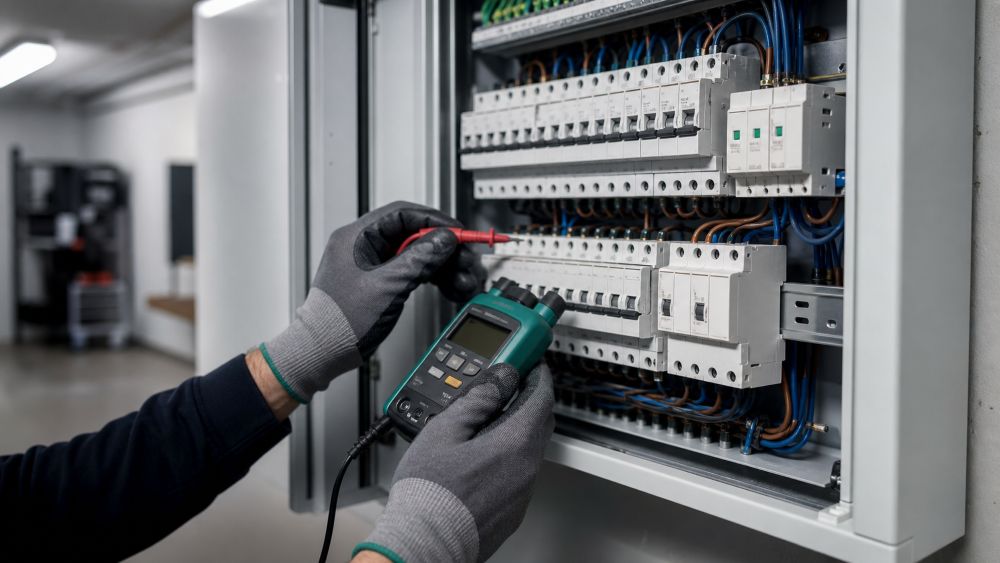
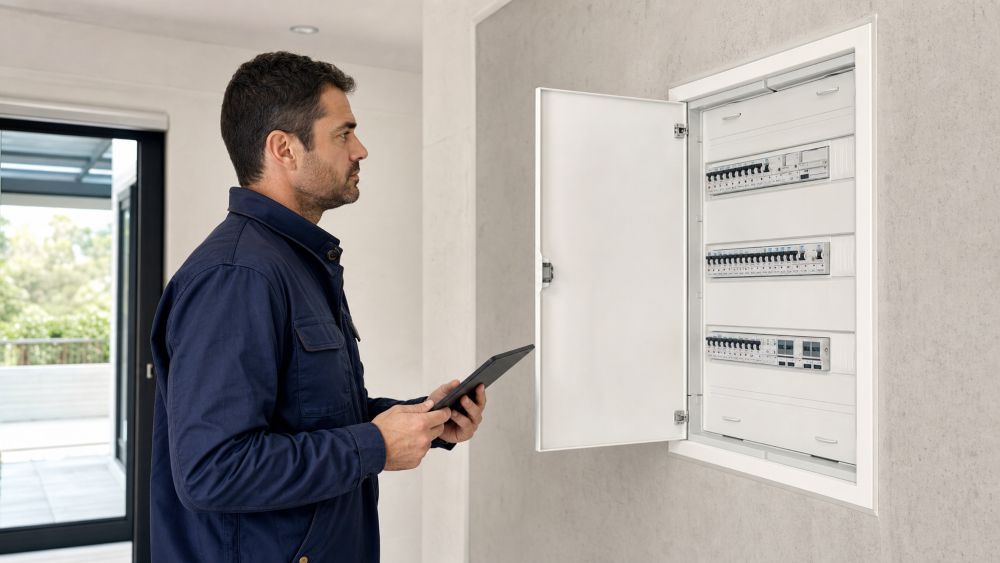
Before installing a charger, it is advisable to review the contracted power, the condition of the electrical panel and the capacity of the installation to supply energy to the vehicle along with the rest of the domestic consumption.
In some second homes, especially older ones, it may be advisable to upgrade certain electrical elements to ensure safe operation.
You may be interested in:
How to know if your home’s electrical installation supports an electric car charger
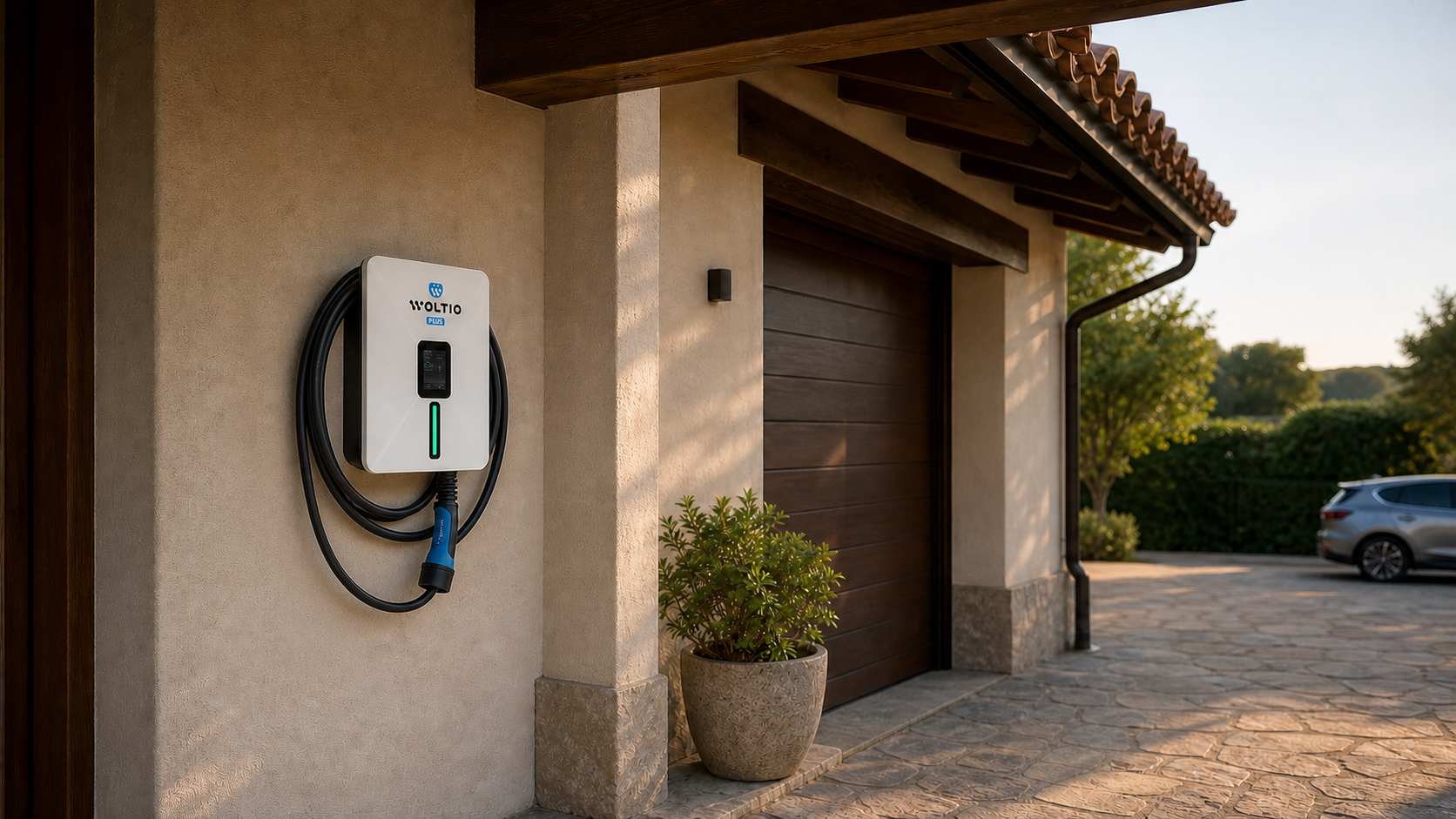
One of the main advantages of connected chargers is that it is not necessary to be physically in the home to monitor their operation.
Remote management is especially useful in a second home, where weeks or even months can pass between one visit and the next.
The WOLTIO application allows you to control different functions of the charger from anywhere as long as the device has an internet connection.
Among other options, it is possible to check the status of the charger, start or stop charging sessions, schedule schedules and review different parameters related to the operation of the equipment.
This information allows you to verify that everything works correctly even when the home remains empty.
In addition, management from the application facilitates the planning of future stays, since the user can review the configuration before arriving and make the necessary adjustments without first traveling to the home.
To enjoy these functions it is necessary that the charger has connectivity.
In this sense, at WOLTIO we offer two solutions.
The Cloud Kit allows you to connect the charger to the internet and access all the remote management functions available from the WOLTIO application.
For its part, the Dual Kit incorporates both connectivity and photovoltaic surplus management functions in a single module.
The choice will depend mainly on whether or not the home has solar panels and the needs of each user.
It is increasingly common for second homes to incorporate photovoltaic installations to reduce electricity consumption and increase self-consumption.
If you also have an electric car, the energy generated by the solar panels can be used to carry out an important part of the vehicle’s charging.
You may be interested in:
Charge your electric car with solar panels
The greatest production of a photovoltaic installation is usually concentrated during the central hours of the day.
As long as the vehicle remains connected during that period, the charger can harness a significant portion of that energy to power the battery.
This strategy makes it possible to directly use the electricity produced by solar panels and reduce the amount of energy that must be obtained from the grid.
In homes where the car is parked for long days, as is often the case during holidays, it is especially easy to organize recharging to coincide with the times of greatest solar generation.
WOLTIO has different solutions to manage the energy from a photovoltaic installation.
OurPhotovoltaic Kit It is aimed at automatically adapting the charging power according to the available solar surpluses. Thanks to the continuous measurement of the home’s production and consumption, the system adjusts the recharge to make the most of the energy generated by the panels.
For its part, our Dual KitYoIt incorporates the same surplus management capacity and also adds remote connectivity through the WOLTIO application.
Therefore, it can be a particularly interesting option for those who want to control the charger from anywhere and, at the same time, optimize the use of solar energy from a single module.
At the end of your vacation, it is advisable to spend a few minutes checking the condition of the charger before leaving your home.
A correct configuration will allow you to find the equipment ready for the next stay.
Before leaving, it is advisable to check that the vehicle is disconnected from the charger.
It may also be advisable to review the schedule set from the application to ensure that there are no automatic schedules set up that are no longer necessary.
If the charger has connectivity through the Cloud Kitor the Dual Kit, the user will be able to later access the configuration from anywhere whenever they need it.
Keeping your equipment properly configured makes it easier for it to remain ready to use again when you return home.
When it’s time to enjoy your second home again, it’s a good idea to do a quick check before connecting the vehicle.
It is advisable to visually check the condition of the charger, verify that the cable and connectors are not damaged and confirm that the electrical installation works normally.
If the device has a remote connection, it is also useful to check from the application that the charger appears connected and that it maintains the planned configuration.
With these simple checks, the charging point will be ready to function normally from the first moment.