Safety is a key field in the electric car charging sector. The power and voltage setting must be appropriate so that the electrical installation is not compromised, so some brands already incorporate systems into their range of chargers that allow automatic adjustment of power to avoid the dreaded overloads.
This is the case of WOLTIO’s smart chargers for electric cars, which have a system that avoids precisely this problem thanks to its ability to adjust the power autonomously and dynamically.
Dynamic power control is a technology that automatically regulates the amount of electricity that an electric car charger can use in real time. This regulation takes into account how much energy is being consumed in the rest of the electrical installation, such as in a house or office building, and adjusts the power for charging the vehicle to avoid exceeding the limit contracted with the electricity company.
In practice, this means that the system constantly “measures” the amount of energy being used by other appliances (such as the oven, air conditioning or electric heating) and, based on this consumption, decides how much electricity can be used to charge the car without overloading it.
When the demand of the rest of the installation decreases, the charger can increase the power to charge the vehicle faster. If the overall consumption rises, the system reduces the charging power to prevent the system from overloading.
This type of control allows efficient and safe use of the available energy, without the need to increase the contracted power, which can be costly and, in some cases, unfeasible.
Charging an electric car requires a considerable amount of energy. If a charger is connected without any type of regulation, and at the same time other electrical appliances with high consumption are used, it is easy to exceed the contracted power. When this happens, the electrical system activates the protection mechanisms, such as the circuit breaker or circuit breaker tripping, and the supply is cut off.
Electrical overloads can have important consequences. In the best of cases, they only involve a temporary interruption of the power supply. But if they are frequent or poorly managed, they can cause failures in electrical equipment, deterioration of the installation and even safety risks.
In addition, many people do not have room to increase the contracted power, either because of technical restrictions in the building or because the cost of the increase is high. In these cases, it is essential to be able to manage the charging of the electric vehicle without compromising the stability of the electrical installation.
Dynamic power control solves this problem by ensuring that the vehicle is only charged with the energy that is actually available. This avoids the need to manually monitor the charging process or to switch off other electrical appliances to avoid outages.
WOLTIO has integrated a dynamic power control system into some of its electric vehicle charger models. This system is designed to act automatically, without user intervention, and ensures that vehicle charging is adapted to actual power consumption conditions in real time.
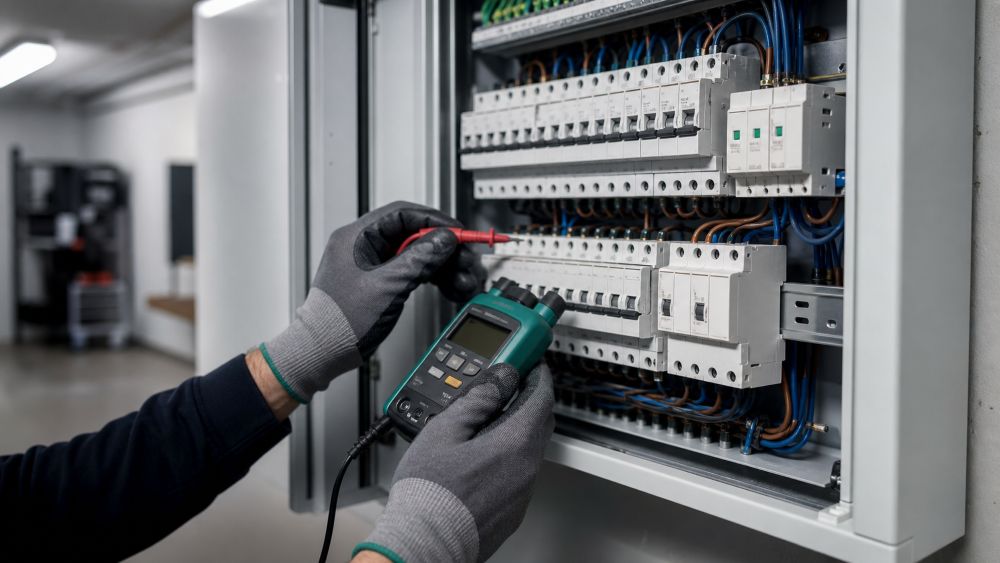
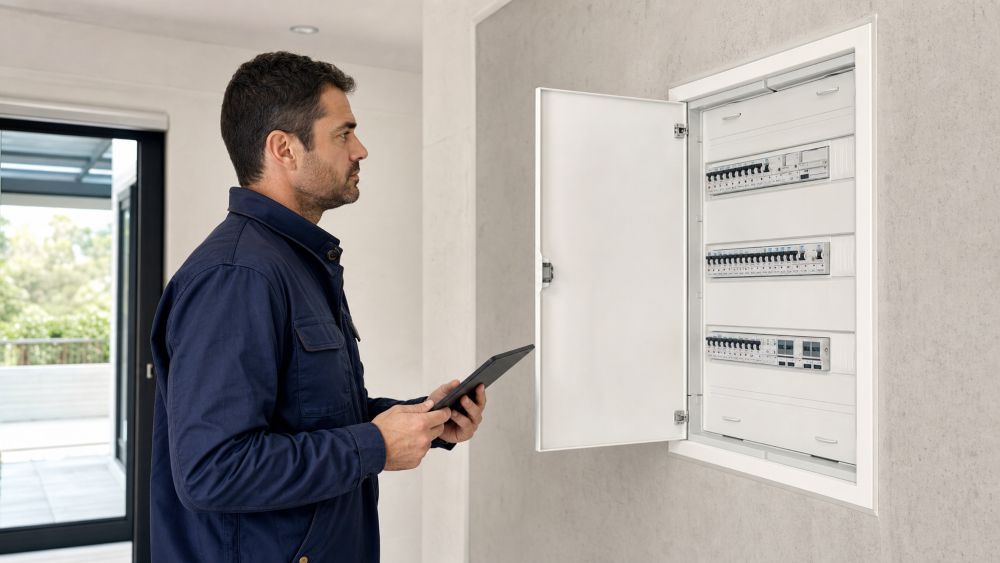
Operation is based on the installation of a current meter (also known as a consumption sensor or current clamp) in the main electrical panel of the place where the charger is to be used. This sensor measures how much electricity the rest of the installation is using. The information collected is sent to the charger, which interprets it and adjusts the charging power based on that data.
For example, if during the night most of the appliances are off and consumption is low, the charger can use the maximum power available to charge the vehicle as quickly as possible. On the other hand, if during the day several appliances are connected at the same time (such as oven, washing machine and air conditioning), the charger automatically reduces the power it uses to avoid exceeding the contracted limit.
This process is carried out continuously. The system constantly measures the total consumption and updates the vehicle’s charge level according to changes in energy demand. All this happens without the user having to do anything.
The WOLTIO system also takes into account the type of installation and the specific site configuration. It can be adapted to single-phase or three-phase installations, and is configured according to the maximum power that can be used to avoid overloads. This flexibility allows the same principle to be used in different types of buildings, from single-family homes to community parking lots or companies.
In short, WOLTIO’s dynamic power control system acts as a kind of “moderator” that prioritizes the overall electrical use of the installation, reserving only the surplus energy for vehicle charging, thus ensuring stable and safe operation.
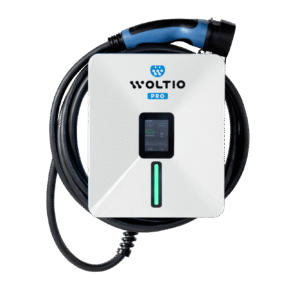
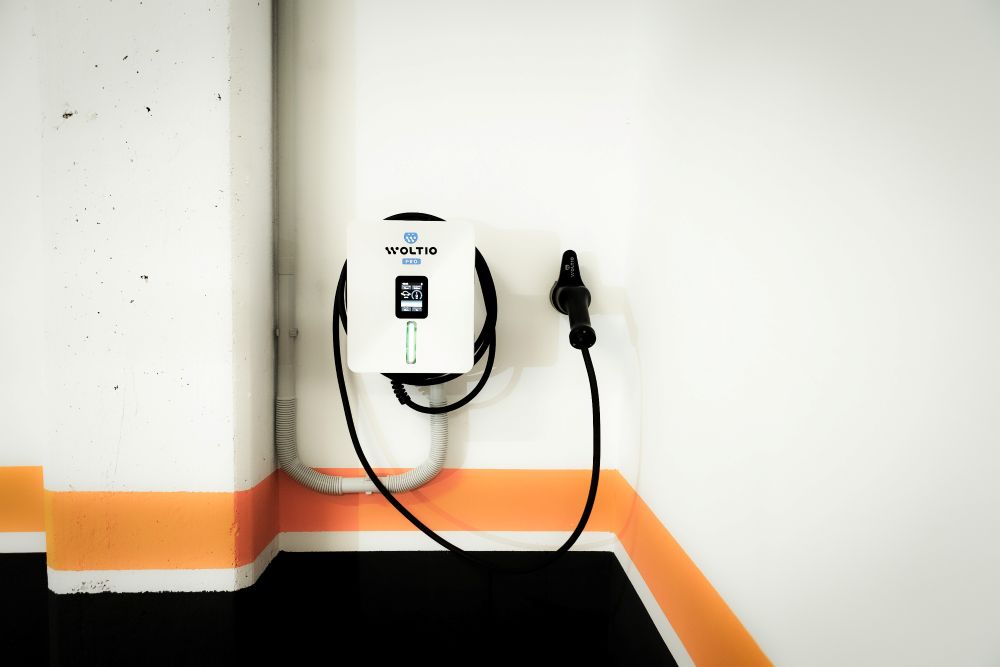
Not all electric vehicle chargers come with dynamic power control as a standard feature. In the case of WOLTIO, this functionality is available exclusively in the WOLTIO Pro, the model designed for installations where efficient energy management is essential.
Thanks to dynamic power control, this model automatically adjusts the charging current based on the electrical consumption of the rest of the installation, avoiding overloads and optimizing the use of available energy.