Range is one of the most important factors to consider when purchasing an electric car.
Unlike combustion engine cars, which can be refueled in a matter of minutes and have gas stations almost everywhere, electric cars depend on batteries and charging stations.
Therefore, it is essential to understand how the range of these vehicles works. In this article, we explain everything you need to know, from how range is calculated to what you can do to improve it.
The range required for an electric car depends largely on how you intend to use it. Not all drivers have the same needs.
If you mainly use your car for short trips, such as commuting to work or running errands around town, a range of between 200 and 300 kilometers is usually more than enough. It is also easier to find charging stations for these types of trips.
On the other hand, if you need to make long trips frequently, a range of 400 kilometers or more can give you greater peace of mind. Although there are more fast-charging stations today, charging times are still longer than filling up with gasoline, so having more range reduces the need to stop as often.
It should also be noted that the range advertised by manufacturers does not always correspond to the actual range. Therefore, it is always advisable to allow for an additional margin when planning long journeys.
The range of an electric car is calculated based on its battery capacity and average energy consumption. The basic formula is as follows:
Range = Useful battery capacity (kWh) ÷ Average consumption (kWh/100 km) × 100
For example, if a car has a 60 kWh battery and an average consumption of 15 kWh per 100 kilometers, its theoretical range would be 400 kilometers.
However, this figure is only an estimate. Manufacturers usually indicate the range according to a standard test cycle, such as the WLTP (Worldwide Harmonized Light Vehicles Test Procedure). This cycle attempts to simulate real driving conditions, but it is still a laboratory test.
Therefore, although it is more accurate than previous cycles, it may not fully reflect what is experienced on the road.
In addition, range can also vary depending on other factors, such as driving style, weather, air conditioning use, and battery condition.
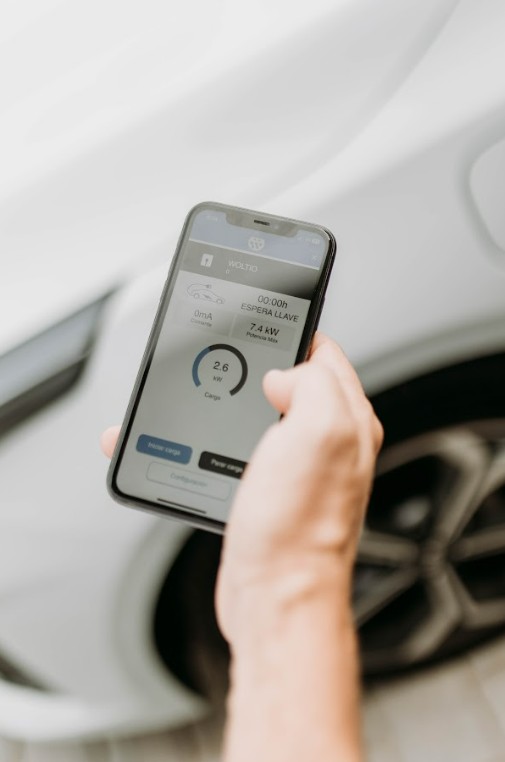
To find out the real range, it is best to look at independent tests carried out by specialized magazines, consumer organizations and the media. These tests are carried out under conditions of use more similar to those of an average driver, and generally provide figures that are closer to reality.
Another way of finding out the real range is through the experience of other drivers. There are forums and online communities where users share their range figures in different circumstances.
In addition, many electric cars include an estimate of the remaining range on the instrument panel. This estimate is adjusted based on your driving style and current conditions, so it can help you get a clearer idea of how far you can go.
You may also be interested in:
What is the battery life of an electric car?
The range of an electric car can vary greatly depending on different factors. Some of the most important are:
Aggressive driving, with sharp accelerations and frequent braking, consumes more energy. In contrast, a smooth and steady driving style helps conserve the battery for a longer period of time.
Driving at high speeds, especially on freeways, significantly increases energy consumption. At moderate speeds, range improves.
Cold weather reduces battery capacity and increases consumption, as the car needs more energy to heat the passenger compartment. Extreme heat can also affect battery performance.
Both heating and air conditioning consume energy. On long journeys, their constant use can reduce range.
The more weight the car is carrying (passengers, luggage, heavy objects), the greater the strain on the engine and therefore the greater the battery consumption.
Urban journeys, with frequent stops, are generally more efficient for electric cars due to energy regeneration during braking. On the other hand, freeway journeys, being more constant and faster, can consume more energy.
Over time and with charging cycles, batteries lose some of their capacity. This results in a reduction in the battery’s capacity.
With the passage of time and charging cycles, batteries lose some of their capacity. This results in a progressive reduction of the maximum range.
Although there are factors that you cannot control, such as the outside temperature, there are several things you can do to make better use of your electric car’s battery:
Avoid unnecessary acceleration and maintain a constant speed whenever possible. Use regenerative braking to recover energy during braking.
If you know the location of charging points, you can avoid unnecessary detours and reduce range anxiety. Some applications and navigators already include specific routes for electric vehicles.
Use the air conditioning system sparingly. Whenever possible, take advantage of pre-climatization while the car is plugged in, so that the passenger compartment is at a suitable temperature without consuming battery power.
Incorrect tire pressure can increase rolling resistance and therefore fuel consumption. Always keep tires inflated according to the manufacturer’s recommendations.
Do not load the car with unnecessary objects. The lighter it is, the less effort the electric motor has to make.
Many electric cars have an efficient driving mode (“eco” mode) that limits engine power and adjusts the use of the climate control to reduce consumption.
Make the periodic revisions recommended by the manufacturer. Proper maintenance helps to keep the vehicle and battery in good condition.
The range of an electric car is not a fixed figure, but an estimate that depends on many factors. Although official figures can serve as a reference, it is important to know the actual conditions in which the car will be used.
As battery technology improves and the recharging network expands, range will no longer be an obstacle for many drivers. But in the meantime, knowing how it works, what affects it and how to optimize it is key to enjoying the full benefits of electric mobility without surprises.
Understanding these aspects will not only help you make an informed decision if you are thinking of switching to an electric car, but will also allow you to get the most out of it if you already have one.