In recent years, the rise of electric vehicles has brought numerous advancements in technology and charging solutions. The technology that allows an electric car battery to be recharged has evolved considerably, and many EV owners are curious about how it works. Let’s explore how the system functions.
What Is an Electric Car Charger and How Does It Work?
An electric car charger is a device responsible for transferring electrical energy to the vehicle’s battery.
Its main function is to convert the alternating current (AC) from the grid into a current that can be stored in the batteries—typically direct current (DC).
This is essential because the car’s battery requires a type of energy that can be safely and efficiently stored.
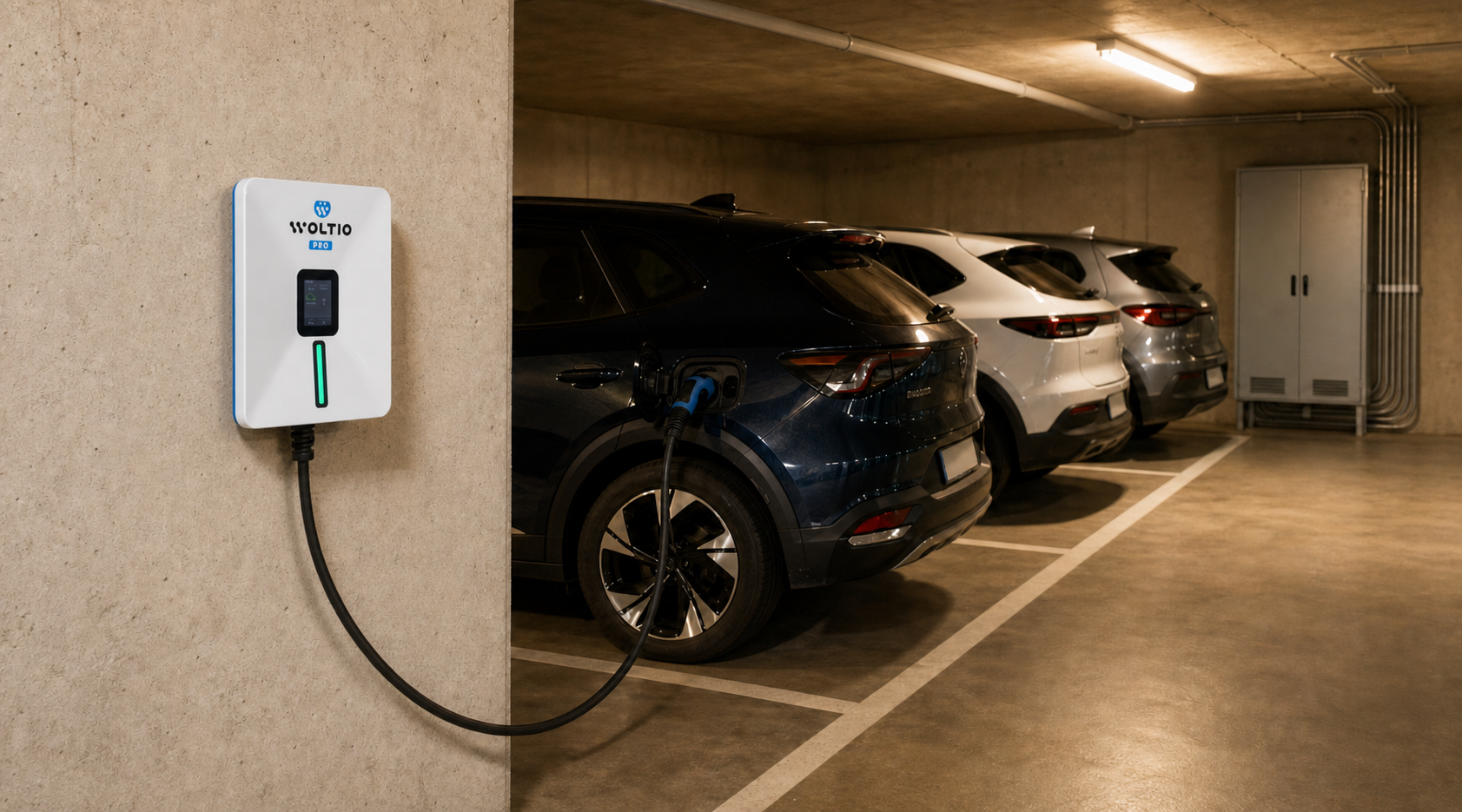
The charging process begins when the user connects the car to the charger. At that moment, the charger assesses the situation and establishes communication with the vehicle. This communication is crucial to ensure that the energy transfer is carried out correctly and safely.
The charger detects parameters such as the battery’s charge level, system capacity, and other technical aspects that may vary depending on the vehicle model.
Once communication is established, the device proceeds to convert the alternating current (AC) supplied by the electrical grid into direct current (DC) that can recharge the battery.
This conversion is carried out using electronic components that regulate voltage and current intensity. Proper regulation is key to avoiding battery damage and maximizing charging efficiency.
Smart Chargers vs. Conventional Chargers: What’s the Difference?
The evolution of charging technology has led to two main types of chargers: conventional and smart chargers. Although both serve the purpose of charging batteries, they differ significantly in terms of features and capabilities.
Conventional Chargers
Conventional chargers are known for their simplicity. They operate directly without making many adjustments during the charging process.
These units provide adequate performance for basic use and are ideal in situations where continuous charge monitoring is unnecessary.
Advantages of conventional chargers include:
- Lower cost: Generally more affordable, making them accessible to more users.
- Ease of use: Their simple design makes them user-friendly, even for those with no technical knowledge.
- Durability: With fewer electronic components and advanced features, they tend to be robust and less prone to minor malfunctions.
However, conventional chargers do not optimize the charging process, as they don’t adapt to changing conditions or the battery’s specific needs throughout its life cycle. This means they cannot take advantage of off-peak electricity rates, potentially resulting in higher energy costs over time.
Smart Chargers
In contrast, smart chargers integrate advanced technology that provides greater control and customization of the charging process.
These devices use algorithms and communication systems that interact with both the electrical grid and the vehicle, optimizing energy flow based on environmental conditions and battery status.
Key features of smart chargers include:
- Real-time monitoring: They provide constant updates on the charging status, voltage levels, and battery temperature.
- Remote scheduling and control: Many smart chargers come with mobile apps or web interfaces that allow users to schedule charging during specific hours—especially helpful for accessing lower electricity rates during the night or off-peak hours.
- Charging optimization: By dynamically adapting to the battery’s needs, these devices can reduce charging time without compromising safety.
- Renewable energy integration: Some models are designed to work with solar or wind energy systems, allowing the use of clean energy sources.
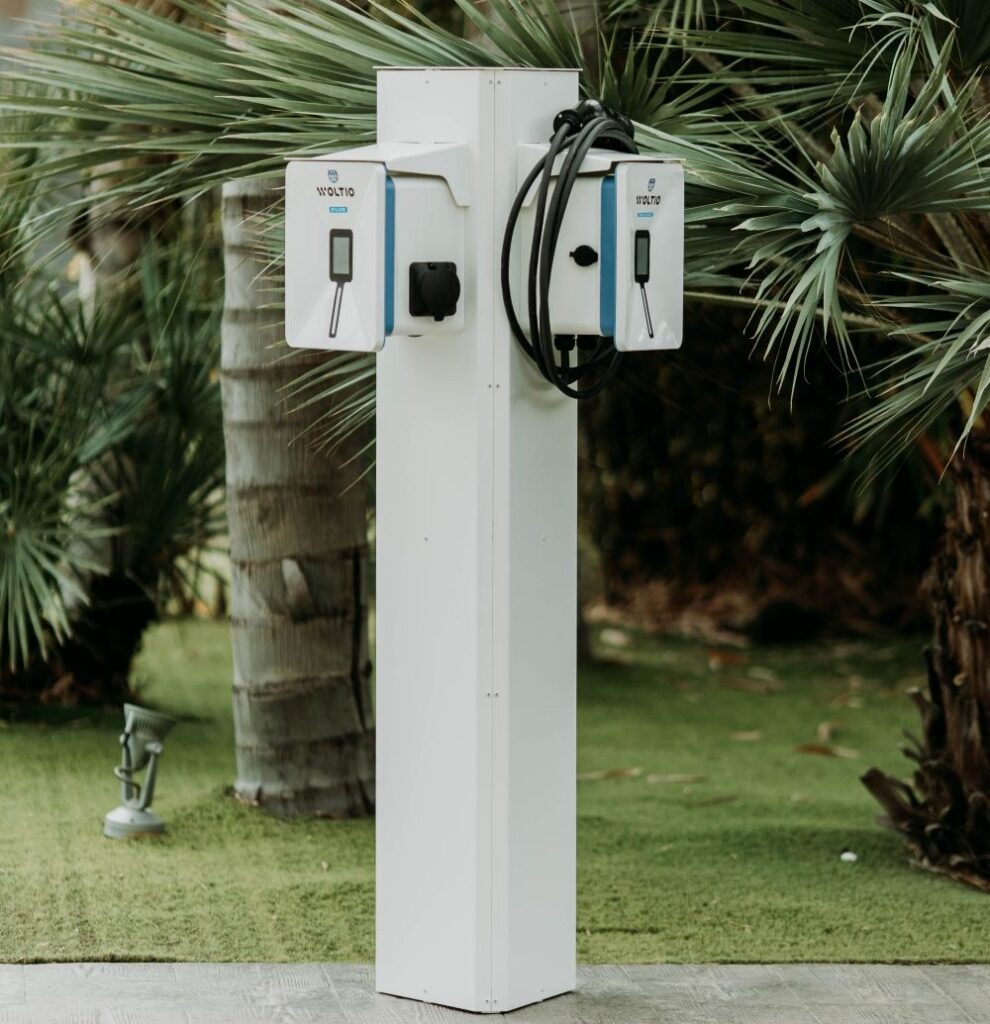
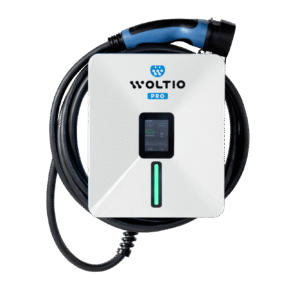
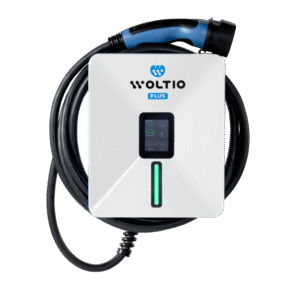
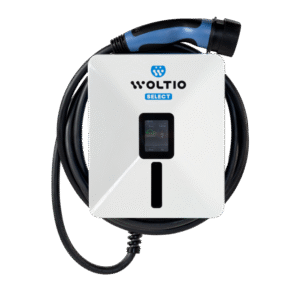
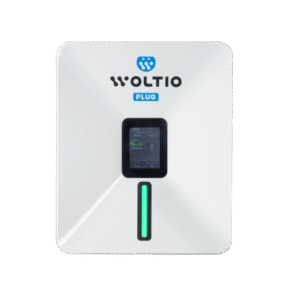
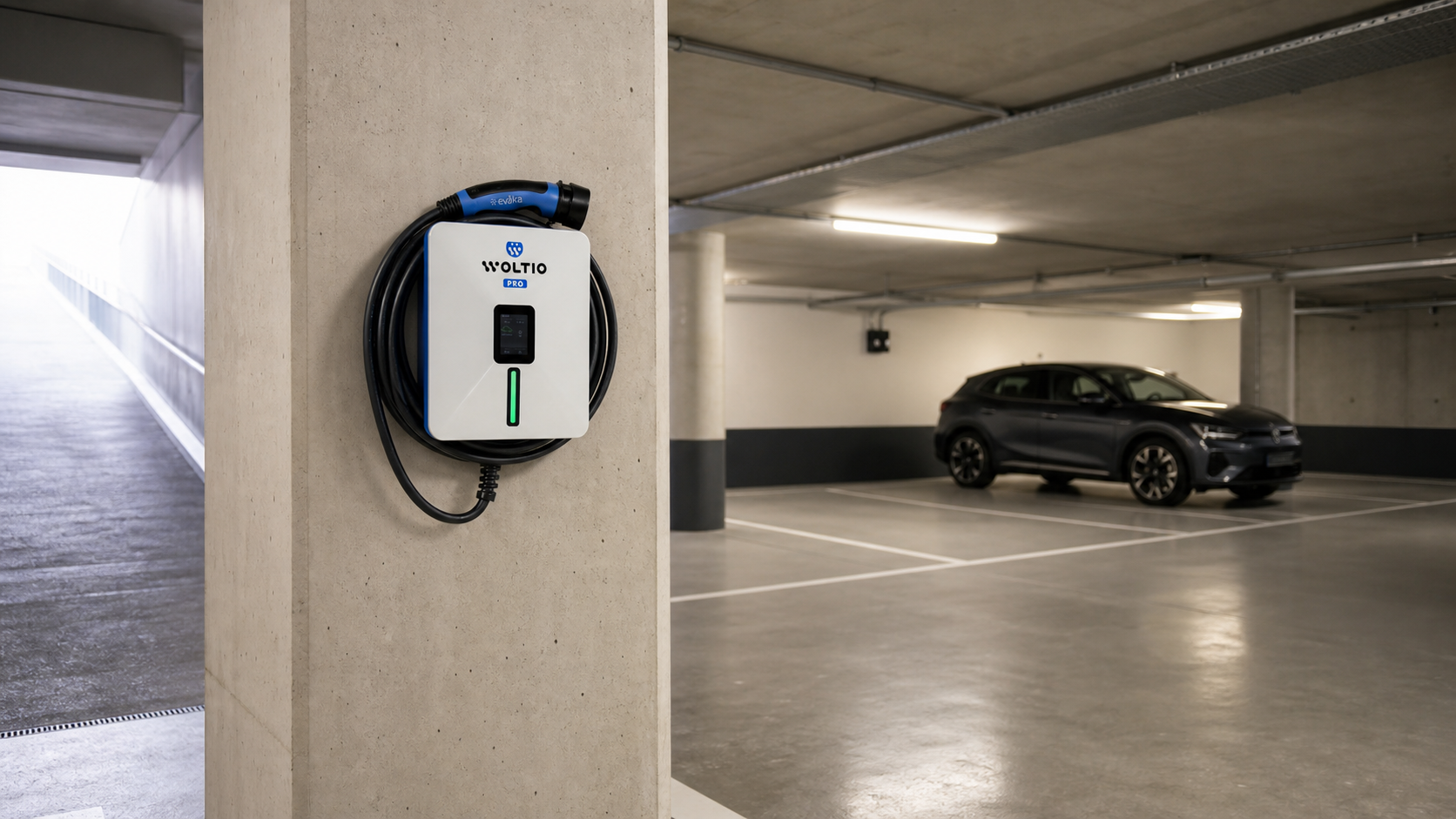
A smart charger is the best option for those who want complete control over the charging process. It offers more flexibility to the owner and provides a much more efficient charging experience. WOLTIO electric car chargers are 100% smart, delivering advanced performance in all types of environments. In the long run, they are also more economical—either because they allow you to use renewable energy from solar panels for self-supply or because they enable charging during hours when the cost per kWh is lowest.
How to Choose the Right Charger for Your Electric Car
Choosing the right charger is not a complicated task, but it does require consideration of various technical and personal factors based on your needs and how you plan to use the vehicle.
Power and Compatibility
One of the first factors to consider is the charger’s power. Power is measured in kilowatts (kW) and determines how quickly the battery will charge. A higher-power charger offers faster charging but may also require a suitable electrical setup at home or wherever the charger is installed.
It is essential to check your EV’s specifications to ensure the charger is compatible with the battery’s requirements.
Also, keep in mind that some vehicles have limitations on how much energy they can safely receive. It’s a good idea to consult your vehicle’s manual and, if in doubt, speak with a professional or an authorized service center.
Additional Features
Depending on your usage, you may want a charger with additional features. For example, smart chargers offer scheduled charging capabilities, allowing you to take advantage of cheaper electricity during off-peak times.
Real-time monitoring and the ability to receive software updates are also features that can significantly enhance the user experience.
If you use your car mainly for short daily commutes, a conventional charger might be sufficient. However, if you rely heavily on your vehicle and want full control over the charging process, investing in a smart charger is likely the best choice.
Cost and Maintenance
It’s important to weigh the cost against the device’s durability and efficiency. While smart chargers are usually more expensive, they can lead to long-term savings by optimizing charging and reducing energy usage during high-rate periods. They also help avoid problems related to excessive power draw or poor installation.
Maintenance should also be considered. Most modern chargers include diagnostic systems that facilitate fault detection and preventive maintenance. Choosing a reputable manufacturer can offer added assurance in terms of quality and technical support when needed.
If you want to learn more about how an electric car works, we explain the full process here.