Installing an electric car charging point is a process that requires careful consideration to ensure safe, convenient, and efficient charging.
It is not just a matter of choosing a charger that is compatible with the vehicle: factors such as the condition of the installation and the location where it is placed also have an influence. And this has a greater impact on the quality of the charging experience than it might seem, so it is vital to know where to place it.
The location affects the durability of the equipment, ease of use, and compliance with regulations. Aspects such as height, safety distances, and the degree of protection against dust, water, and possible impacts must be taken into account in order to use it without compromising its integrity.
The first important decision is to determine whether the charging point will be installed indoors or outdoors. Both options are valid, but there are several differences in installation and daily use that must be taken into account before deciding.
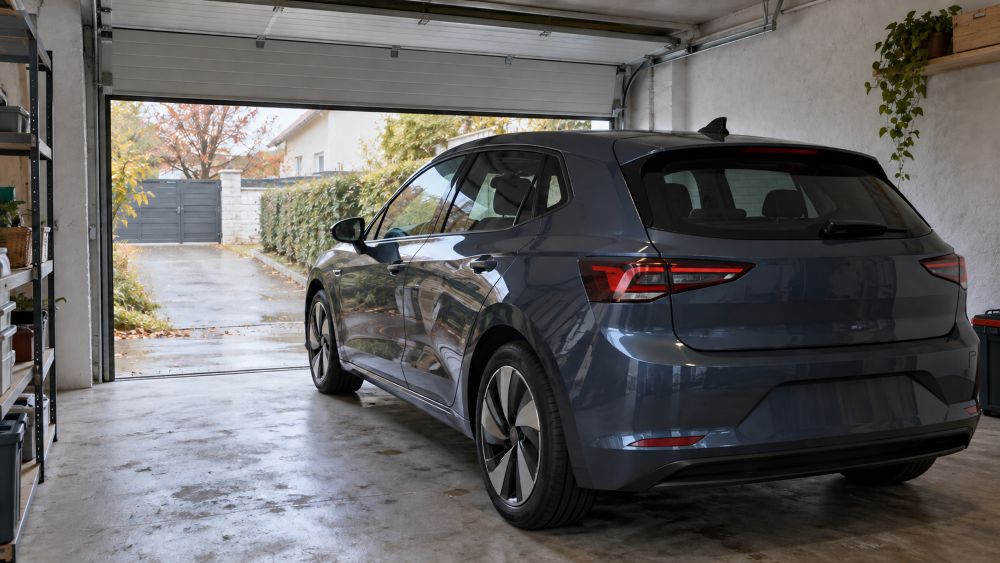
In private indoor garages, whether single-family or communal, installation is usually simpler. The charger is protected from rain, direct sunlight, and sudden temperature changes, which reduces wear and tear on materials and makes maintenance easier.
In addition, the wiring is usually more accessible, which can simplify electrical installation. In these cases, the charging point is usually placed near the parking space, on a side or front wall, avoiding areas where it could be accidentally knocked.
In outdoor locations, such as open-air parking spaces, patios, or facades, it is essential to pay attention to environmental exposure. The charger will be exposed to rain, humidity, dust, and solar radiation, all of which can affect the charger’s service life.
It is therefore essential that the equipment is prepared for these conditions and that the installation is carried out in as sheltered a location as possible, for example, under an eave or a canopy. It is also advisable to avoid locations that are exposed to direct sunlight for many hours a day.
It should be noted that passageways such as garage entrances or ramps require special attention. The charging point should not obstruct the passage of people or vehicles, nor should it be placed in locations where the cable could become a tripping hazard. In these cases, a side location is preferred for proper cable management, ensuring that it is tidied away when not in use.
You can read more if you need to know how to choose the best place to install your electric charger at home.
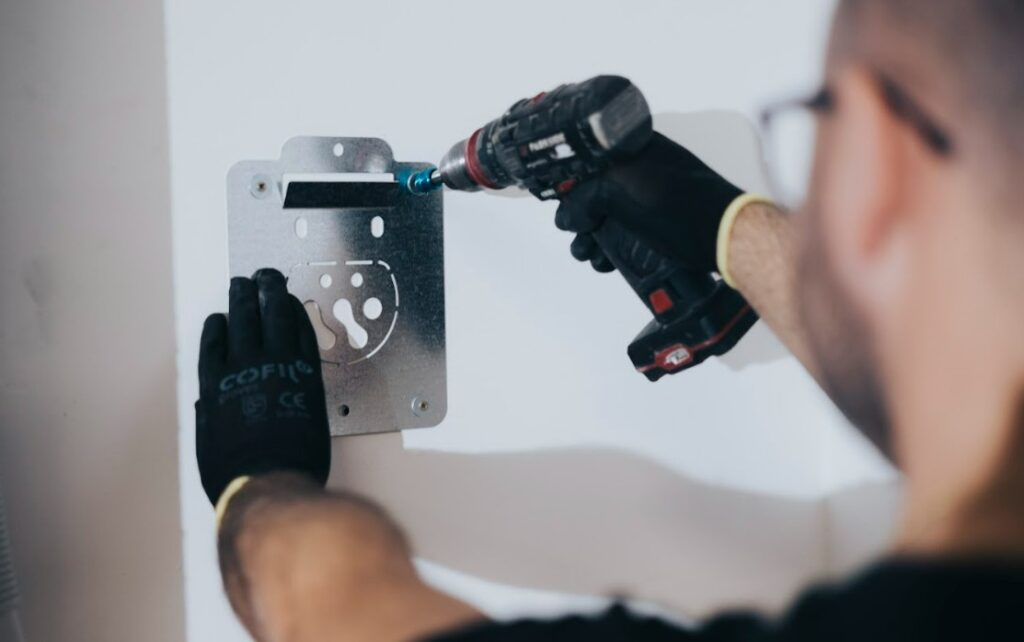
The height at which the charging point is installed is an aspect that is often underestimated, but it has a direct impact on ease of use and safety.
In general, it is recommended that the charger be placed at a height of approximately 80 to 120 centimeters from the floor to the bottom or center of the device, a space that ensures comfortable access to the connector and controls without having to bend down excessively or raise your arm uncomfortably.
In addition to height, it is important to observe certain safety distances. In relation to the vehicle, the charger should be positioned so that the cable reaches the charging port with slack, without being taut or forced.
This is especially relevant if you change cars in the future, as not all models have the connector in the same position. Leaving a reasonable margin avoids having to modify the installation later on.
With regard to side walls, it is advisable to leave sufficient space for ventilation of the equipment and to facilitate maintenance tasks. Although many current chargers are designed to operate without forced ventilation, a minimum separation helps to prevent heat build-up. It is also recommended not to install the charging point in very tight corners.
The distance from the ground is another key factor, especially outdoors or in garages where there may be moisture or dirt. Placing the charger too low increases the risk of water splashes or accidental knocks, so maintaining the recommended height reduces these risks and prolongs the life of the equipment.
IP and IK ratings are technical indicators that provide information on the level of protection a device has against external agents, and understanding what they mean is essential for choosing the right location for the charging point and the most suitable model.
The IP (Ingress Protection) rating consists of two digits. The first indicates protection against the ingress of solids, such as dust, and the second against liquids, such as water. For example, a charger with an IP54 rating offers sufficient protection against dust and water splashes from any direction. This level is usually suitable for indoor garages and many protected outdoor installations.
In more exposed locations, such as uncovered outdoor areas, a higher IP rating, such as IP65, is recommended. This level guarantees greater resistance to dust and water jets, providing peace of mind in adverse weather conditions.
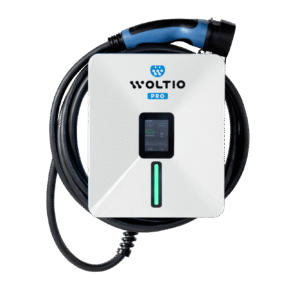
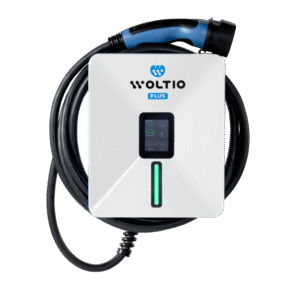
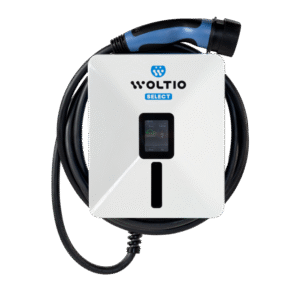
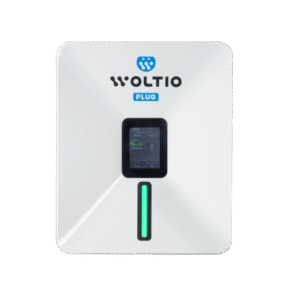
WOLTIO chargers are designed with these scenarios in mind, allowing them to be installed both indoors and outdoors, provided that the appropriate model is chosen and the manufacturer’s recommendations are followed.
The IK rating, on the other hand, measures the equipment’s resistance to mechanical impact. The higher the number, the greater the protection against impact. In communal garages or passageways, where there is a risk of accidental impact, it is advisable to choose a charger with a high IK rating to help prevent damage caused by doors, bicycles, or other objects.
Selecting a charger with the appropriate IP and IK ratings ensures that it can be used without risk of damage and with maximum resistance guarantees.
One of the most common mistakes is choosing the location solely based on proximity to the vehicle, without considering other factors. Placing the charger too close to the ground, in an area exposed to impact or without protection from the elements can cause problems in the short term. To avoid this, it is essential to analyze the environment before carrying out any installation.
Another common mistake is not thinking about the future. Changing cars, modifying parking spaces, or adding a second electric vehicle are increasingly common situations. Installing the charging point with some leeway, both in terms of cable length and location, facilitates future adaptations without having to redo the entire installation.
It is also common to underestimate the importance of IP and IK ratings. Installing a charger with insufficient protection outdoors can cause failures due to moisture or dust. The solution here is to choose equipment designed for the environment in which it will operate, which is especially important for outdoor installations.
Another mistake to avoid is not having qualified professionals for the installation. The right location goes hand in hand with a proper electrical installation that complies with regulations and ensures the safety of the user and the vehicle.
Opting for smart chargers such as those from WOLTIO and specialized installers reduces any risk of improper installation or the omission of certain environmental factors that qualified personnel know how to identify.