A few years ago, the main goal was to have good range and a sufficient charging network. Now, new technologies are beginning to emerge that expand the possibilities of electric vehicles. One of the most promising is V2G bidirectional charging.
Thanks to this system, an electric car is no longer just a means of transport; it can also become an element capable of storing and supplying energy when needed. This opens the door to new ways of managing electricity consumption both in homes and within the distribution grid itself.
Although it is still in a phase of development and gradual implementation in many countries, interest in this technology continues to grow. Understanding how it works and what advantages it can offer helps explain where the future of home charging is headed.
What V2G bidirectional charging is and how it works
The acronym V2G stands for Vehicle to Grid.
Unlike conventional charging, in which electricity only flows from the power grid to the vehicle’s battery, bidirectional charging allows that energy to also travel in the opposite direction.
This means the car can store electricity when energy is cheaper or when there is excess production and later return part of that energy to the grid when demand increases.
For this system to work, several elements must come together. The vehicle must be compatible with bidirectional charging, the charger must also incorporate this technology, and the electrical infrastructure must be prepared to manage that energy exchange safely.
As manufacturers, energy companies and public authorities continue to develop these types of solutions, V2G technology is emerging as a tool capable of improving the efficiency of the electrical system and supporting greater integration of renewable energy.
Differences between V2G, V2H and smart charging
Although they are often mentioned together, V2G, V2H and smart charging refer to different concepts.
The V2G system allows energy to be exchanged between the vehicle and the power grid. The car can both charge and return electricity when conditions make it beneficial.
V2H (Vehicle to Home), on the other hand, uses the vehicle’s battery to power a home directly. In this case, the energy is not sent to the public grid but is used for household consumption.
Smart charging, however, does not mean the vehicle returns energy. Its goal is to optimize when charging takes place. A smart charger can automatically schedule charging during lower-cost hours, adjust the available power or manage different parameters to improve energy efficiency.
How your electric car can interact with the grid and your home
Bidirectional charging transforms the role of the electric vehicle within the energy system. Its battery can become a useful resource both for the power grid and for the home itself.
Returning energy to the grid
One of the best-known uses of V2G is returning part of the stored electricity when the grid needs support.
For example, if thousands of vehicles remain connected while they are not being used, a small portion of the energy in their batteries could help balance electricity demand during periods of higher consumption.
This model would make it possible to better use production from renewable sources and support a more stable and flexible power grid.
Using the car battery to cover household consumption
Another possibility is to use the vehicle as an energy source for the home itself.
In certain situations, the car’s battery could power part of the household consumption during hours when electricity is more expensive or even provide backup energy in the event of a temporary power outage, provided the installation and equipment are compatible.
In homes with photovoltaic self-consumption systems, this capability could also help store surplus energy generated during the day for later use when solar production decreases.
What benefits V2G can bring at home
The main advantage of V2G is that it makes much better use of the storage capacity of the vehicle’s battery.
Instead of remaining inactive during the hours when the car is parked, that energy can be used in different ways to improve the efficiency of the electrical system.
Potential benefits include greater flexibility in consumption management, better use of renewable energy and the possibility of reducing energy costs in certain scenarios.
In addition, the expansion of these technologies could help create a more balanced power grid, especially in a context where the number of electric vehicles continues to grow year after year.
Although implementation will still depend on technological development, regulations and compatibility between manufacturers, bidirectional charging represents one of the developments with the greatest potential within the electric mobility sector.
Thinking about getting a smart charger for your EV?
Take a look at our home electric car chargers.
When it may make sense to consider V2G
At present, bidirectional charging is still not widely available to all users, but there are profiles that could benefit especially from this technology as it becomes more widespread.
Homes with high electricity consumption, those with photovoltaic installations or users who leave their vehicle parked for many hours may find this type of solution particularly interesting.
It may also be especially useful for those looking to optimize their energy consumption as much as possible and take advantage of future electricity tariffs or compensation programs that encourage electric vehicles to participate in grid management.
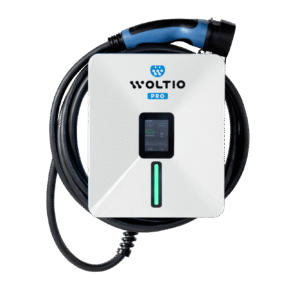
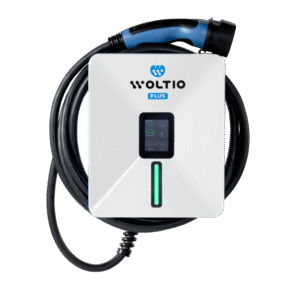
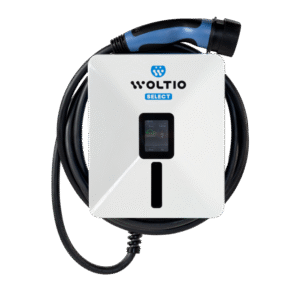
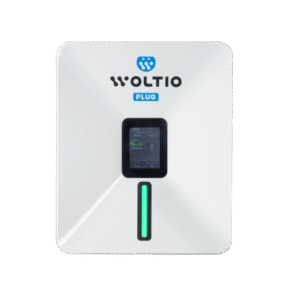
While V2G continues to develop, having a smart charger remains an excellent investment to improve the efficiency of daily charging. WOLTIO chargers allow you to control charging from anywhere via the app, schedule charging times and manage the process easily, offering a solution designed to meet the current needs of electric vehicle and plug-in hybrid owners.
The evolution of electric mobility is not limited to covering more kilometers. It also involves integrating the vehicle into the home energy ecosystem, where technologies such as V2G could play an increasingly important role in the coming years.