The popularity of electric cars has driven the development of new tools designed to optimize charging times, reduce energy costs, and make users’ daily lives easier.
Among these solutions, smart charging has become one of the most highly valued. This technology allows vehicle charging to be managed automatically, efficiently, and tailored to the needs of each home or business.
The main objective is to adjust the charging process to different factors: available power, electricity prices, driving habits and, in the case of more complex installations, even the state of the power grid.
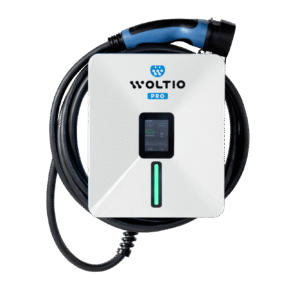
Chargers such as the WOLTIO PRO have been designed to work with this type of system, as they allow the main parameters to be controlled from the WOLTIO app.
Smart charging refers to a set of techniques and tools that allow the recharging of an electric car to be managed automatically and adapted to different factors. Its aim is to make the most of the available energy, avoid overloads, and reduce the cost of electricity consumption. To do this, the smart charger regulates the power, time, and rate of charging without the user having to constantly intervene.
In a smart charging system, the charger communicates with other elements, such as the home’s electrical installation, smart meters, or, in some cases, the power grid. Thanks to this communication, the device can decide when to charge, how much energy to send to the vehicle, and how to distribute the power so as not to exceed the contracted limits.
Smart charging not only has a practical function: it also pays off financially. It allows charging to be shifted to the cheapest times of the day, surplus energy from solar panels to be used, and the total electricity consumption of the home to be kept below the contracted power limit. That is why it is becoming increasingly common in private homes, businesses, and public charging points.
How smart charging works depends on the type of installation, the charger model, and the user’s habits. However, the general logic is quite similar in all systems.
First, the smart charger collects information from the power grid or the home’s electrical panel. This includes data such as available power, real-time consumption, or the price of energy if a variable rate is available. Based on this information, the charger calculates the optimal power to send to the vehicle at any given time.
User interaction is also important. Tools such as the WOLTIO app, available for iOS and Android, allow users to set their preferred charging times, establish power limits, or activate automatic modes that optimize costs. Users can monitor the process from anywhere, giving them complete control without having to go to the charging station.
Secondly, the system adapts the power output according to the needs of the home. If at any given moment the consumption of household appliances is high, the charger temporarily reduces the energy supplied to the electric car to avoid power cuts. When demand decreases, it increases the power again and completes the process safely.
Finally, the most advanced systems include features such as dynamic power balancing, integration with renewable energies, and smart programming. These tools make the process even more efficient, especially in homes with solar self-consumption or companies with vehicle fleets.
Financial savings are one of the main reasons why users are interested in smart charging. Although the exact figure depends on the electricity tariff, battery capacity, and charging habits, smart charging can significantly reduce monthly costs.
Firstly, smart charging allows you to take advantage of off-peak hours or periods when electricity prices are lower. Many users schedule charging for the night, which can translate into significant savings over the course of a year. Secondly, if your home has solar panels, smart charging allows you to use surplus energy produced during the day, further reducing your electricity costs.
Efficient use of contracted power also influences savings. Without smart charging, some households are forced to increase their contracted power to avoid outages when using the charger and other appliances at the same time. Smart charging manages this balance and avoids having to pay for higher power.
In practice, many users can save a significant percentage on their annual bill, depending on the combination of these factors. Smart charging thus becomes a key tool for those who want to optimize consumption without sacrificing the convenience of home charging.
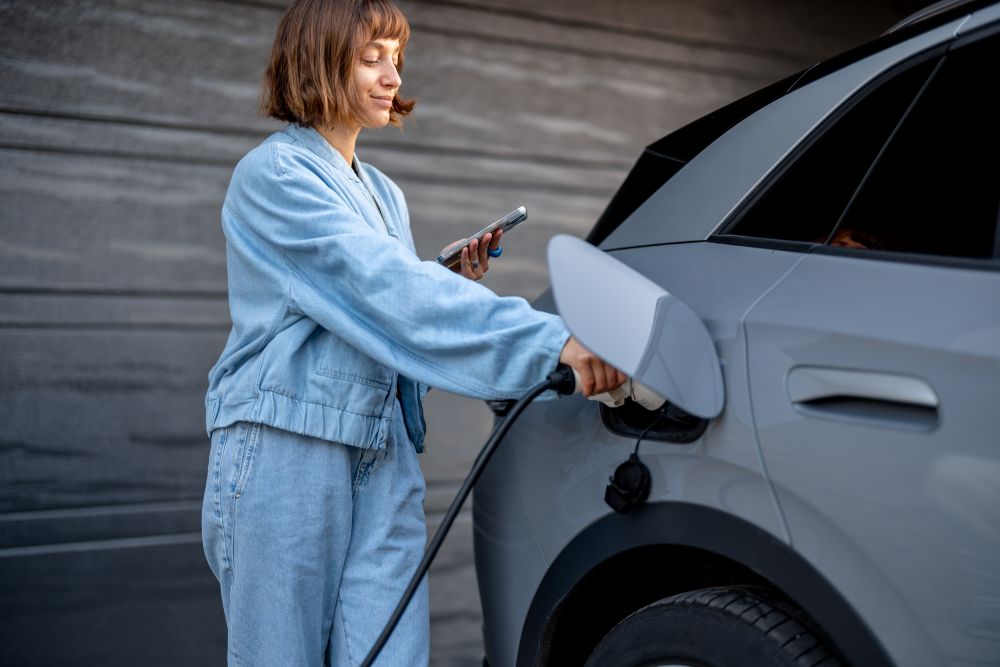
Smart charging brings numerous benefits to electric vehicle owners, both from a practical and economic point of view. Among the most notable are:
In addition to the individual advantages, smart charging also has a positive impact on the environment. From an environmental point of view, the main benefits are:
Lower carbon footprint associated with electric cars. An electric car charged during off-peak hours or with renewable energy has less environmental impact than one charged randomly during the day. Smart charging makes electric mobility even more environmentally friendly.