The battery is one of the essential components of an electric car, and also one of the parts that raises the most questions. One of the most common is whether it’s better to charge to 80% or 100% to keep the battery’s lifespan in good condition.
The truth is there isn’t a single answer that applies to every case. It depends on how the vehicle is used, how often it’s charged, and the types of trips you take. What is clear is that the way charging is managed affects the battery’s long-term health.
When we talk about charging to 80% or 100%, we’re referring to the battery’s state of charge, known as SOC (State of Charge). This percentage indicates how much energy the battery has stored relative to its total capacity.
Charging to 80% means the battery isn’t completely filled. A 20% safety margin is left. Charging to 100% means completing the charge up to the maximum allowed by the vehicle’s system.
Most batteries in today’s electric cars—primarily lithium-ion—perform best when they aren’t kept for long periods at extreme levels, meaning neither completely empty nor completely full. Staying at 100% for a long time can create more chemical stress on the cells.
That’s why many drivers choose to limit daily charging to 80%. This practice is easy to apply, since most vehicles allow you to set the maximum charge percentage from the car’s own system or from an app.
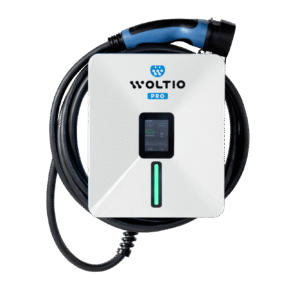
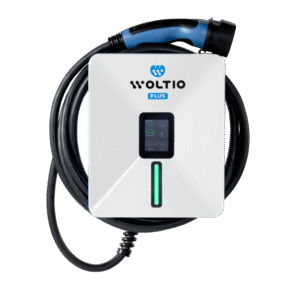
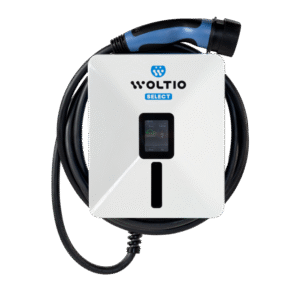
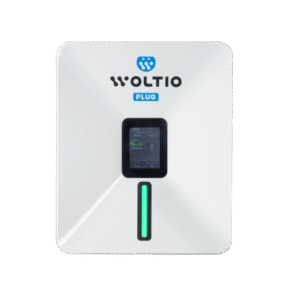
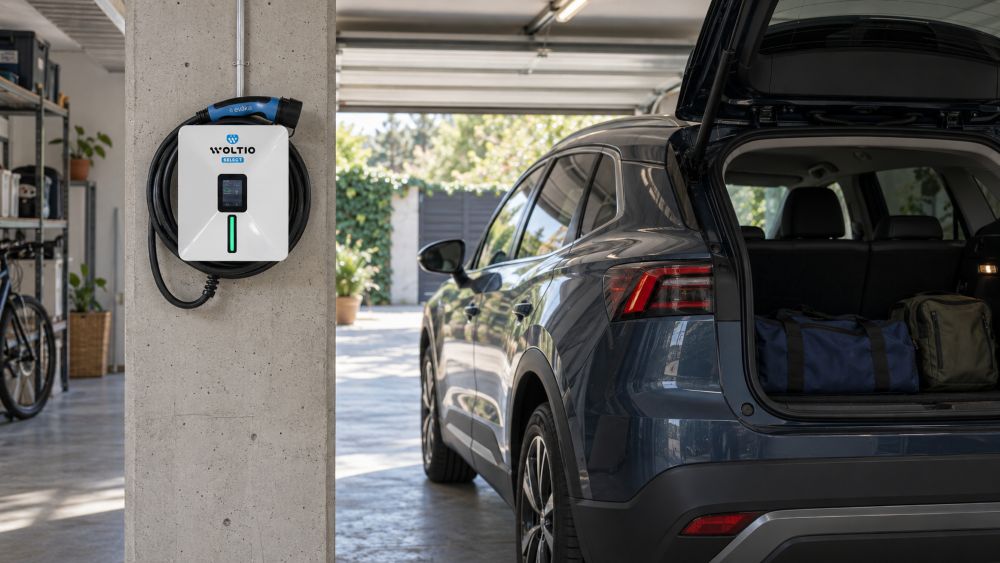
In addition, with smart chargers like WOLTIO’s—compatible with all models that use a Type 2 connector—you can conveniently control and plan charging from your phone, thanks to the WOLTIO app for iOS and Android.
Most manufacturers agree on a general recommendation: for daily use, it’s preferable to charge to 80%. For long trips, it does make sense to charge to 100%.
The reason is simple. In everyday life, you rarely need 100% of the range. Typical journeys are usually short to medium. Charging to 80% reduces the time the battery spends at its maximum level and helps reduce long-term degradation.
By contrast, before a long journey, charging to 100% lets you take full advantage of the available range and reduce the number of stops needed. In these cases, the impact on the battery is occasional and isn’t a problem as long as it doesn’t become a constant habit.
It’s also important to keep in mind that battery management systems (BMS) are designed to protect the battery. Even when the display shows 100%, there’s usually a small safety buffer the user can’t see. Even so, keeping the battery at maximum for many hours isn’t the most advisable.
Charging to 80% is a very suitable option in many everyday situations. One of the most common scenarios is urban or metropolitan use. If the car is used for commuting, shopping, or short trips, 80% is usually more than enough.
It’s also recommended when charging the vehicle overnight and it will remain plugged in for several hours. Limiting charging to 80% prevents the battery from spending the whole night at 100%.
Another frequent case is when you have a charging point at home or at work. Having regular access to charging makes it easier to keep the battery in a mid-range level, without needing to fill it to the maximum every time.
Smart chargers allow you to schedule charging times and percentages. This helps automate the process and optimize both battery care and energy consumption.
In general, charging to 80% is a practice that fits well into a daily routine.
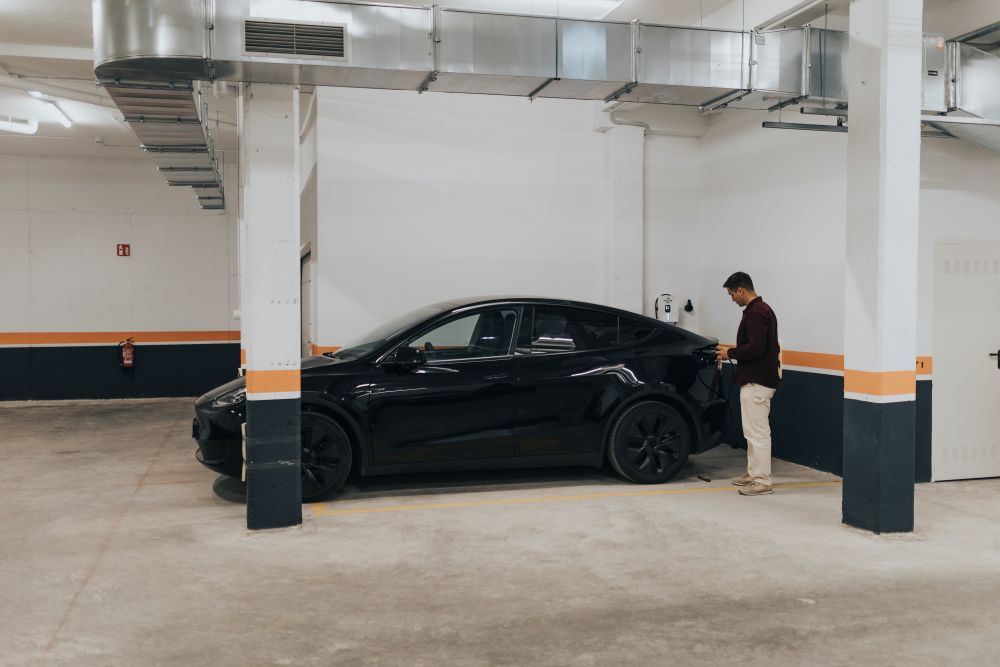
Charging to 100% makes sense in specific situations—for example, a long trip. If you expect to drive many kilometers and don’t want to rely as much on intermediate charging points, filling the battery is the best thing you can do.
It can also be useful in areas where charging infrastructure is limited. In these cases, having maximum range reduces the risk of running out of energy.
To do it with less impact, it’s best to follow some simple guidelines. One of them is to schedule charging so that the car reaches 100% right before you leave. This way, it won’t remain at the maximum level for many hours.
Another recommendation is not to make charging to 100% a daily habit if it isn’t necessary. Using it as an occasional resource is the most balanced approach.
Also, avoiding exposing the vehicle to extreme temperatures when it’s fully charged helps protect the battery.
You may be interested in:
Good charging habits to maximize your electric car’s range.
Always charging to 100% doesn’t mean the battery will fail immediately. Today’s electric cars are designed to handle different usage patterns. However, keeping this practice consistently can speed up degradation over time.
Some signs of wear may be a slight reduction in range or variations in charging times. These changes are usually gradual and part of the battery’s natural aging, but certain habits can influence how quickly that process happens.
Among the most recommended best practices are:
Avoid letting the battery remain at 100% for a long time.
Don’t leave the vehicle at very low charge levels for days.
Prioritize charging to 80% for daily use.
Schedule charging to match real needs.
Ultimately, deciding between charging to 80% or 100% depends on the context. For day-to-day use, 80% is usually enough and more favorable for battery care. For long trips or occasional situations, 100% is a logical option.
The key is to find a balance. With good planning and the support of smart charging solutions, it’s possible to optimize both range and batte