When installing a charging point, electrical protections can be part of the charger itself or installed in an associated panel. The main difference lies in their location and in how the installation is carried out, not in one option providing protection while the other does not. Both configurations can be correct if the devices are properly selected, coordinated, and sized.
For this reason, the comparison should not be limited to asking which alternative is safer. It is worth considering the available space, the distance to the panel, access for maintenance, installation cost, and expansion possibilities. The final decision rests with a qualified installer after reviewing the property and the equipment documentation.
ITC-BT-52 requires the circuit supplying the charging point to be dedicated. It also establishes individual protection against electric shock and overcurrents, in addition to the surge protection measures required by the installation design. Earthing, conductor cross-section, and coordination with existing protections complete the system.
The regulation itself allows certain devices to be part of the fixed installation or to be located within the electric vehicle supply system. Integrating protections does not eliminate the dedicated circuit or the need to check the upstream panel. Nor does it prevent upstream elements from being required to protect the line or coordinate the entire installation.
If you would like to better understand the role of the RCD and the signs of an issue, you can find out what to do if the RCD trips when charging an electric car.
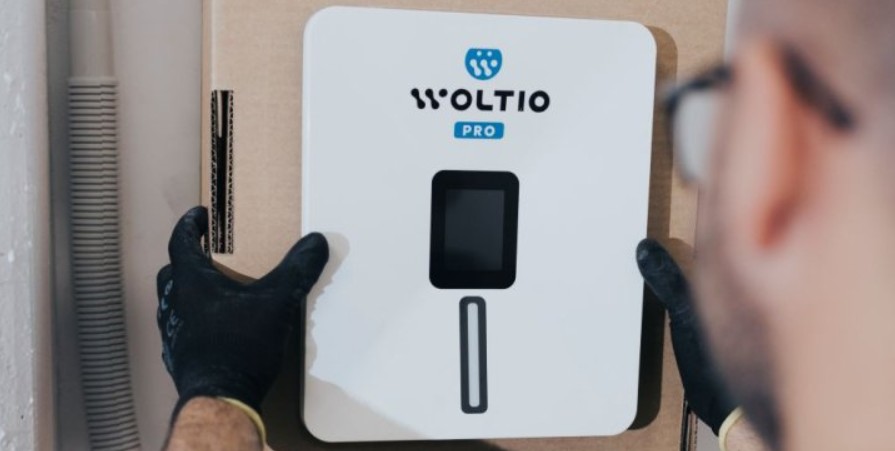
In this configuration, the devices specified by the manufacturer are housed inside the charger’s enclosure. This can reduce the number of visible elements on the wall and simplify installation next to the parking space, especially when there is no room for an additional panel.
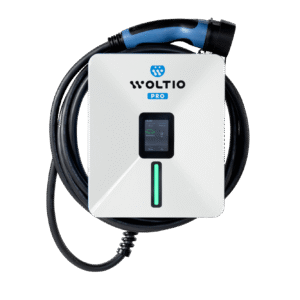
It also makes it easier for the equipment and its protections to be supplied as a coordinated set. At WOLTIO, for example, WOLTIO PRO incorporates the legally required protections and features automatic reset. This function improves continuity of use following certain trips, but it does not replace the assessment or proper installation of the electrical line.
Another advantage is the finish. The installation can be more compact and cleaner, with fewer external enclosures. However, before comparing equipment, the technical data sheet must be reviewed: the term “built-in protections” does not always include the same components. The important thing is to know exactly what the chosen model includes and what must be added externally.
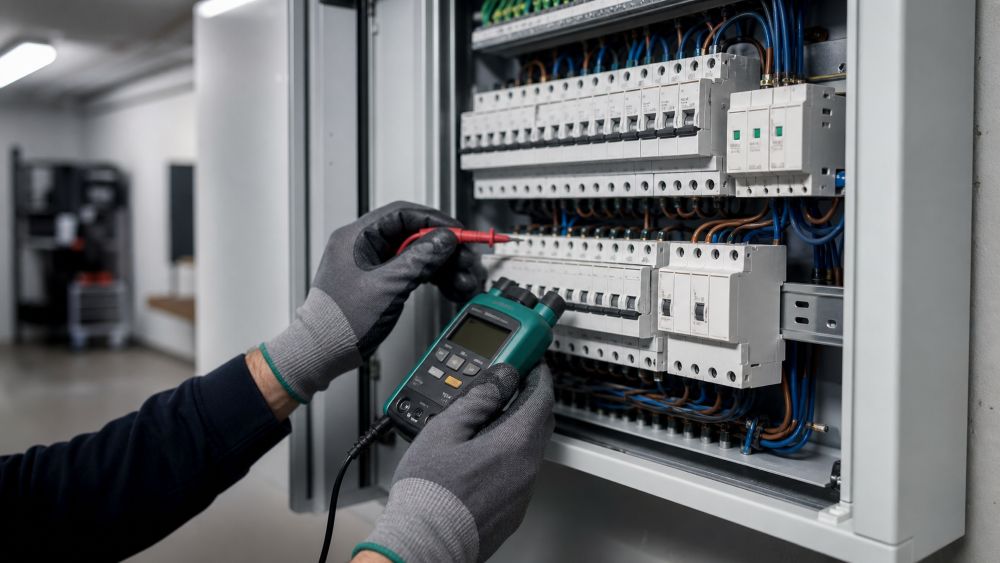
When protections are located in a separate panel or the existing one is expanded, the devices are grouped together and accessible for inspection. This solution can be practical if there is already sufficient space, if future expansions are planned, or if several circuits need to be organized in the same technical area.
It also allows a modular component to be replaced without accessing the inside of the charger. For an installer, circuit identification and checking each device may be more straightforward. In return, it may require an additional enclosure, more wall space, and more wiring time.
The distance between the panel and the parking space affects the cost. If common areas, ceilings, or long cable routes must be crossed, the location of each element must be assessed to maintain circuit protection along its entire route.
In any case, the panel must be clearly identified, protected against tampering, and accessible for the relevant inspections. The most visible solution is not always the easiest to maintain if it is awkwardly located.
Neither configuration is safer simply because it is integrated or separate. Safety depends on the installation complying with regulations, the devices being suitable for the charger, and proper coordination between them.
A poorly selected integrated unit does not correct an inadequate line. Likewise, an external panel with numerous modules does not provide safety if they are incorrectly sized or connected. Before deciding, it is worth checking whether the electrical installation can support a charger and what modifications are necessary.
Built-in protections are often appealing when a compact installation is sought, there is little space next to the parking space, or the aim is to reduce the number of visible boxes. They are also suitable when the manufacturer offers a complete and clearly documented configuration.
Protections in a panel may be worthwhile when capacity is already available, modular access for maintenance is prioritized, or more circuits are expected to be added in the future. In shared garages or installations with several charging points, the overall architecture may make it advisable to centralize part of the protection and distribute another part next to each parking space.
Before accepting a quote, ask for a list of the included devices, their location, protection for the supply circuit, and the means of access for maintenance. A clear quote should explain the complete system, not be limited to the charger.
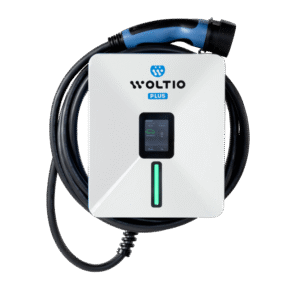
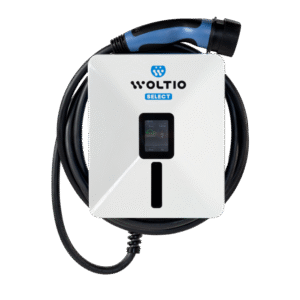
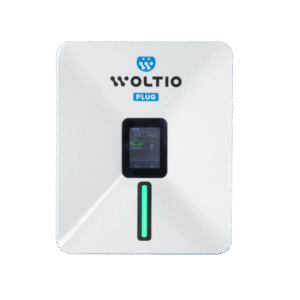
You can compare WOLTIO electric car chargers and review which configuration suits your installation. Choosing well means combining the equipment, protections, and circuit as a single technical solution.