Electric mobility is already part of everyday life for many companies. Just look at the parking areas of many businesses operating today: it’s increasingly common to see charging points in their corporate car parks.
Other businesses, such as hotels, shopping centers, or industrial facilities, are also starting to have their own network of EV chargers. In some cases, they’re installed to meet the needs of the company fleet. In others, to offer an extra service to employees, customers, or visitors. But how do you control who charges, and how can you charge for the energy consumed?
To answer that question, we need to talk about OCPP, the system that allows a charger to communicate with a management platform. That communication is what makes it possible to monitor charging sessions, identify users, and set a price for using the charging point.
OCPP stands for Open Charge Point Protocol. Put into simpler terms, it’s an open communication protocol used by electric car chargers to connect to an external management system. Simply put, it’s the common language that lets the charger and the platform understand each other.
When a charger is OCPP-compatible, it can send information in real time. For example, it reports when a charging session starts and ends, how much energy has been consumed, or whether an incident has occurred. At the same time, it can receive instructions from the platform, such as authorizing a specific user, changing tariffs, or adjusting certain operating parameters.
This system is especially useful in business environments. In a private home, control is usually handled directly through the manufacturer’s app, without needing to integrate the charger into a broader network. However, in companies where there may be multiple charging points and different user profiles, management becomes complicated without a centralized tool.
That’s where OCPP becomes important, because it allows chargers to be connected to a platform that centralizes all the information. From there, activity is monitored, consumption is analyzed, and usage rules are set. In addition, because it’s an open standard, it doesn’t force you to depend on a single software provider. The company can choose the solution that best fits its management model.
That’s why, when it comes to charging installations in companies, public car parks, or shared spaces, OCPP compatibility is often considered an almost essential requirement.
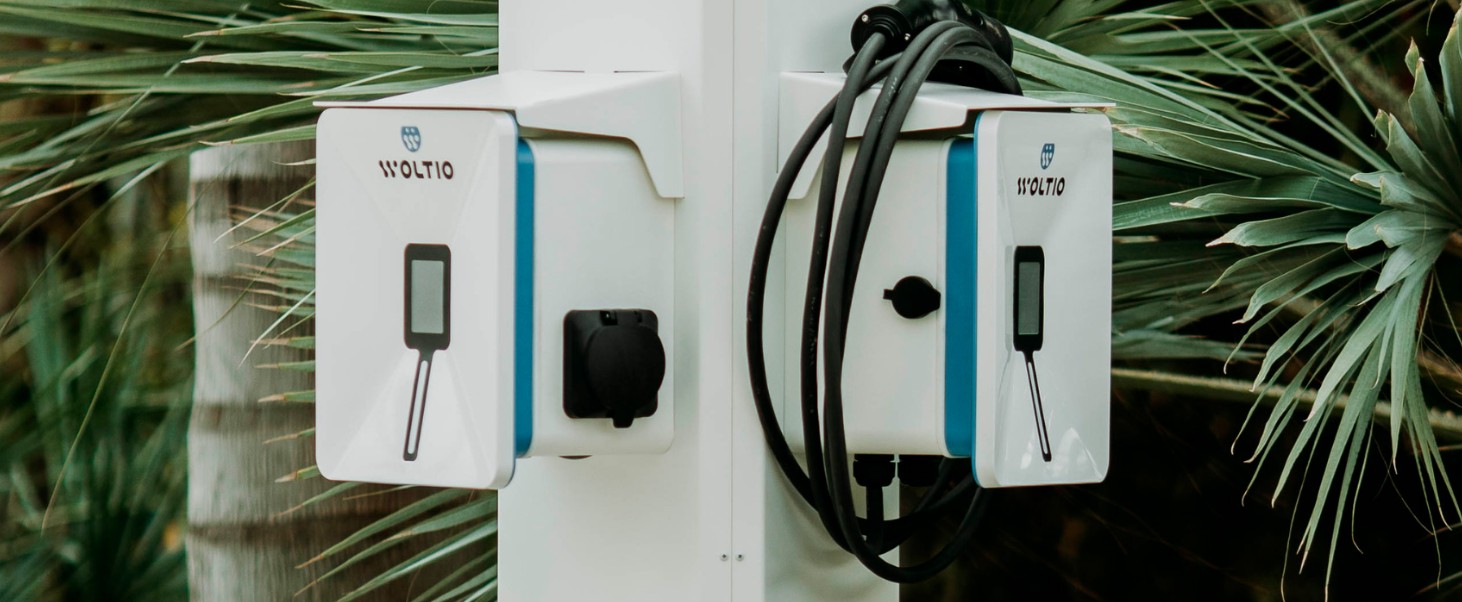
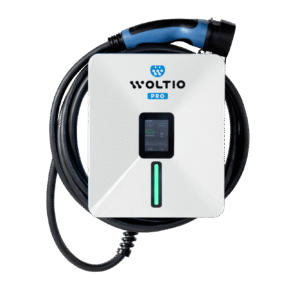
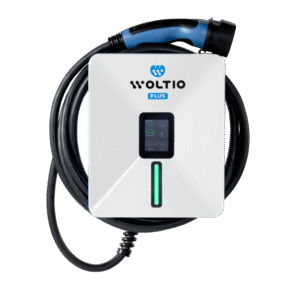
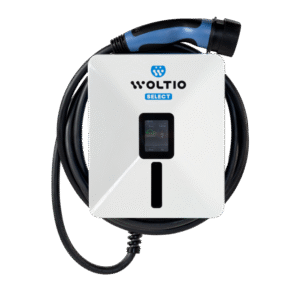
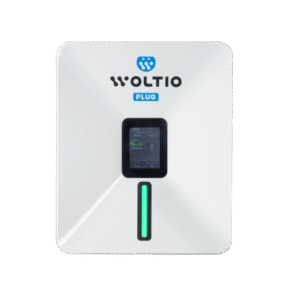
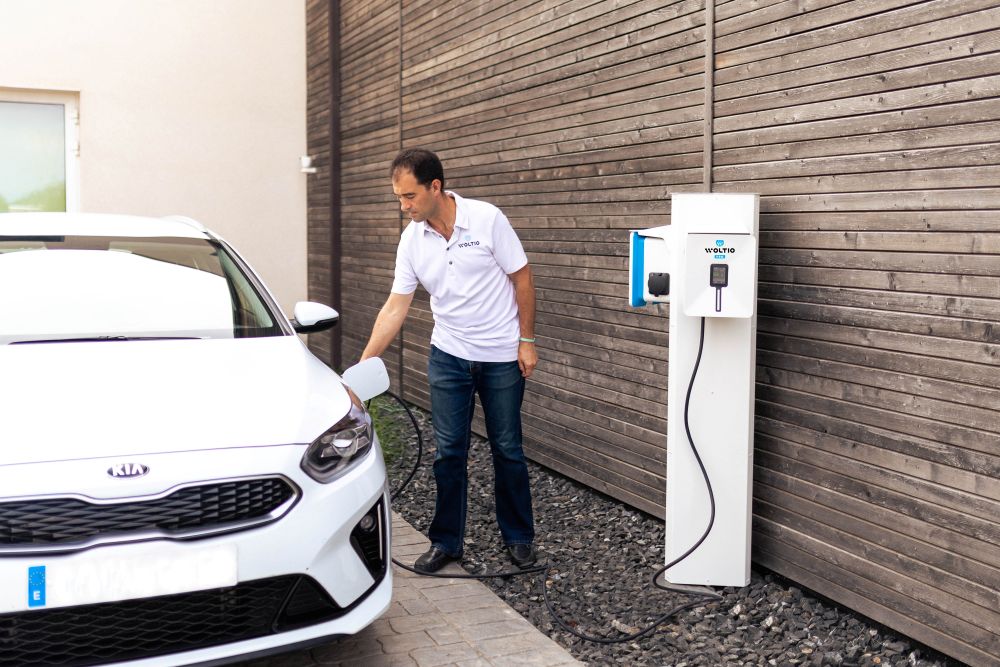
In WOLTIO’s case, its smart charger for businesses is designed to integrate into connected environments. It is universal and compatible with all vehicles that use the European Type 2 connector standard, and it can be part of an infrastructure managed via OCPP.
When the charger connects to a platform through OCPP, it stops operating as a standalone device. It becomes part of a system where every session is logged and where it’s possible to apply company-defined management criteria. This allows, for example, identifying users before authorizing charging. It also provides access to detailed reports on energy consumption and the usage of each charging point.
The combination of connectivity and OCPP compatibility provides flexibility. A company can decide that charging is free for certain profiles, such as employees, and paid for visitors. It can also set different tariffs depending on the time of day or limit access to certain days of the week. All of this is managed from the external platform, while the charger executes the commands it receives thanks to that constant communication.
Operationally, this integration simplifies day-to-day control. The person responsible for the installation doesn’t need to physically monitor each point. They can check data, detect incidents, and adjust settings from the management environment. In addition, the WOLTIO app for iOS and Android makes it possible to keep control over the main charging parameters, adding an extra layer of monitoring and convenience.
Installing a charger is only the first step if the goal is to charge for charging. The device supplies energy and measures consumption, but turning that consumption into a paid service requires additional infrastructure.
First, it’s essential that the charger is OCPP-compatible, since that compatibility is what allows it to connect to a management platform. That platform will be responsible for calculating the cost of each session based on the configured tariffs. It can set prices per kilowatt-hour, by usage time, or combinations of both criteria.
In addition, a payment system must be integrated. In many cases, the platform itself includes gateways that allow payment by card or other digital methods. In other scenarios, it connects with external solutions. The important thing is that there is a clear link between the recorded consumption and the payment made.
Regulatory aspects must also be taken into account. When you charge for the energy supplied, it’s important that metering meets legal requirements. This ensures transparency and avoids disputes. A well-planned installation addresses these details from the outset.
And we shouldn’t forget that the business model also has an influence. Some companies aim to generate direct revenue from charging, while others only want to offset the electricity cost. In both cases, having an OCPP-based system makes it easier to implement the chosen strategy, as it allows tariffs and conditions to be adjusted without physically modifying the charger.
Managing charging points involves handling user data and controlling access. Each session generates information about the user, the date, the duration, and the energy consumed. This data must be handled responsibly and in accordance with current data protection regulations.
A system connected via OCPP makes it possible to log and store this information in an organized way. However, it is the responsibility of the site operator to ensure that data is handled appropriately. This includes defining who has access to the information and how it is protected.
As for physical and digital access, it’s advisable to set clear criteria. Not all users should have the same conditions. In corporate environments, there can be differentiated profiles, which helps maintain control and prevent misuse. The platform associated with the OCPP system makes it easy to apply these restrictions.
On the other hand, security isn’t limited to the digital sphere. The electrical installation must be properly sized and inspected by qualified professionals. A smart charger can manage the available power and adapt to different scenarios, but it needs a solid technical foundation to operate reliably.