Before choosing where to install the charger, it is worth reviewing how the electricity behaves at home. Recurring outages, a damaged socket or an extension for which you have no documentation can provide useful information to the installer. Charging will add consumption that may continue for several hours, so it is advisable to know the condition of the installation before incorporating it.
These signs are intended to help you request an inspection, not to diagnose a fault on your own. Nor is it necessary for any of them to appear in order to carry out the preliminary checks: an installation may appear to work properly and still require adaptations for the new charging point.
If the power goes out several times a week, do not assume that everything will be resolved by increasing your contracted power. The first step is to find out which device is tripping and under what circumstances, because not all outages have the same cause.
The RCD trips in response to certain current leakages. The MCB protects a circuit against overloads and short circuits. Meanwhile, the power control system may interrupt the supply when demand exceeds the contracted capacity. Confusing these cases may lead to proposing a solution that does not fix the problem.
Make a note of which appliances were running and whether it happened when they were switched on or after a while. If you can observe it without removing any covers, identify which switch has tripped. That information is more useful than repeatedly resetting it to see whether it happens again. Do not disable a protective device or replace it with one of a higher rating.
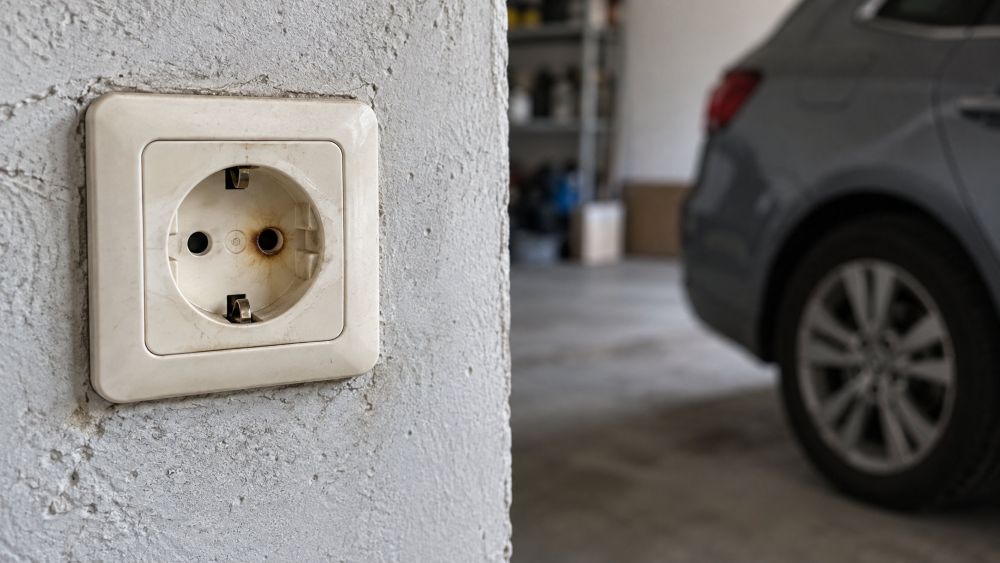
A darkened socket outlet, a deformed cover or a persistent smell of burnt plastic require attention before adding any load. They may be related to a poor connection, a damaged component or an unsuitable load, but the cause must be checked by a professional.
Do not touch an item to find out whether it is hot or plug in another appliance to carry out a test. Stop using the affected point and request assistance. If there is smoke, sparks or fire, move away from the area and call 112. Do not use water on electrical elements.
This sign does not mean that the entire home needs to be rewired either. The inspection should locate the source and determine which parts are affected. A quote based on checks makes it possible to distinguish a one-off repair from a more extensive intervention.
A particular bulb may flicker because of an issue with the bulb itself or because it is incompatible with its dimmer. However, if the variation affects several rooms or repeatedly occurs when an appliance starts up, it is advisable to mention it before installing the charger.
The professional will need to check whether the cause lies in the internal installation, in a piece of equipment or in the power supply. Observing flickering does not allow you to conclude that the wiring is insufficient or that the fault necessarily originates in the home.
To prepare for the visit, record when it happens, how long it lasts and which areas it affects. A video taken from a safe position can help show an intermittent issue. Do not open junction boxes or handle conductors in an attempt to locate it.
Cracked insulation, damaged trunking, a loose socket or leaks near electrical elements are reasons to inspect the condition of that area. Pay special attention to the planned route to the parking area, where there may be impacts, moisture or exposed sections.
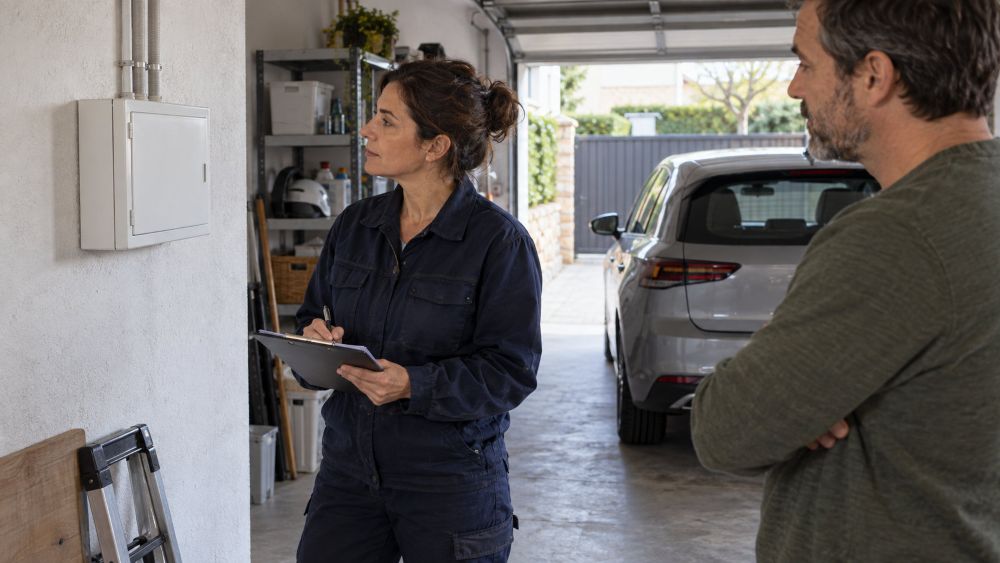
The user’s inspection should be limited to what is visible without dismantling anything. There is no need to touch cables or remove covers to report damage. If there is water near the electrical panel or an outlet, keep away and request assistance before using the affected elements.
The installer will assess the conditions of the location and the protection required. The absence of visible deterioration does not prove that the earthing system, insulation or protective devices are working correctly either: appropriate tests are required for that.
A renovation, the addition of air conditioning or the conversion of a storage room may have changed the electrical requirements. If you do not know what was modified, labels are missing from the electrical panel or temporary solutions have accumulated, explain this situation during the visit.
The age of the building alone does not prove that the installation is unsafe. Likewise, a recently renovated home does not guarantee that all its circuits have been updated. What matters is its actual condition and whether the modifications are suitable.
Gather any installation certificate you have, renovation invoices or reports, and any available diagrams. To understand other aspects of the preliminary assessment, see how to know whether your installation can support an electric vehicle charger.
Report these signs and request that the proposal identifies the checks carried out, the necessary adaptations and the planned solution for the charging circuit. The installation must comply with the Low Voltage Electrical Regulations and ITC-BT-52, with the relevant documentation.
Separate the repairs for existing defects from the work required to incorporate the charger in the quote. It is also advisable to know which checks will be carried out upon completion and which documents you will receive. This will help you understand the scope of the work and retain the information for future inspections.
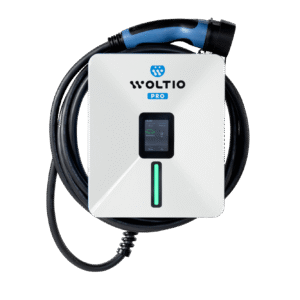
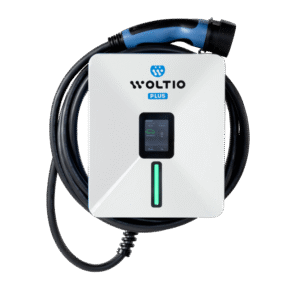
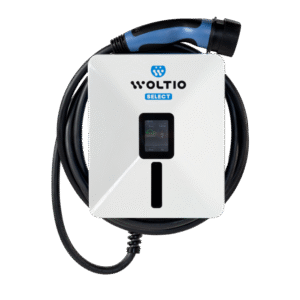
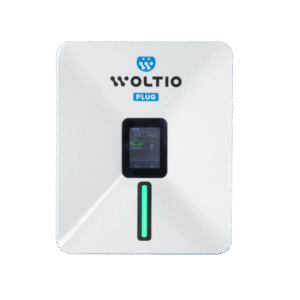
When choosing among WOLTIO chargers for private customers, explain your usual schedules and energy consumption. Power management can adapt charging to the available capacity, but it does not repair damaged connections or replace electrical protective devices. Resolving issues first makes it possible to design charging around an inspected installation.