You arrive home, plug in the car as you do every night and discover that the estimated completion time has been delayed. The charger is the same, but the temperature has dropped. Before assuming there is a fault, it is worth distinguishing what is happening in the battery, how much power the installation has available and what the equipment is indicating.
Slower charging in cold weather does not necessarily mean that the charger is malfunctioning. The vehicle may limit the energy it accepts while preparing its battery. Understanding that difference makes it easier to organise charging and recognise situations that do require inspection.
The temperature shown by the thermometer does not always match the battery temperature. After a long journey, it may retain some of the heat generated while driving. On the other hand, a car that has been parked all night will start charging with a much colder battery, even if both are plugged in in the same garage.
When the cells are cold, the vehicle’s management system may temporarily limit charging power to protect the battery. Some models also use part of the energy received to condition it. During those first few minutes, the recorded consumption may be higher than the energy actually stored.
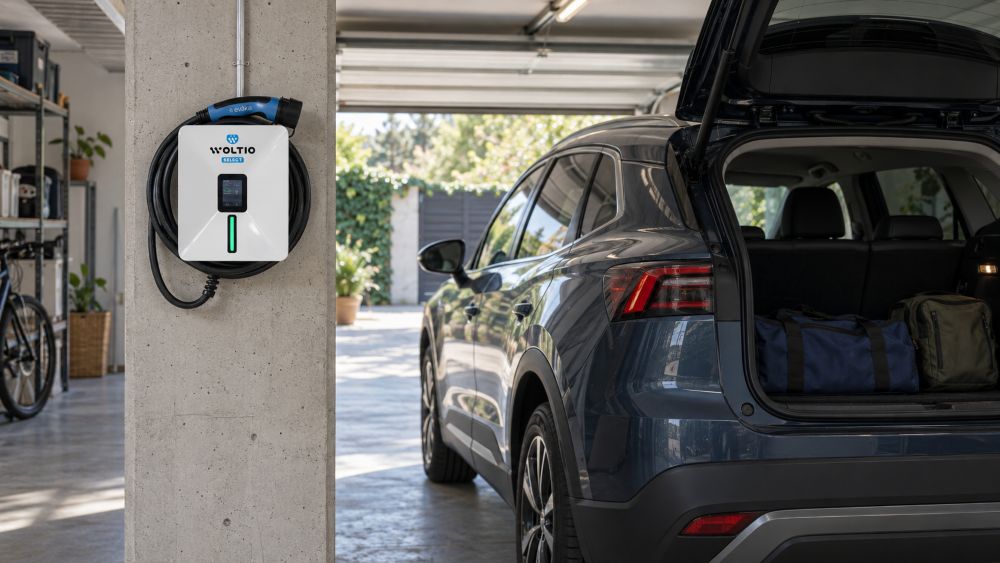
During AC charging, the wall-mounted unit supplies electricity and communicates the available current to the car. The vehicle’s onboard charger then converts that alternating current into direct current to store it in the battery. Actual power is determined by the electrical installation, the charging equipment, the capacity of the onboard charger and the condition of the battery itself.
For this reason, the kilowatts advertised by the charging point represent its maximum available power, but do not guarantee that the car will use it throughout the entire session. You can read our article on how cold weather affects an electric car battery, both in terms of range and vehicle behaviour during the colder months.
Cold weather can extend charging time, although there is no percentage that applies to all electric cars. The result depends on the battery’s initial temperature, its state of charge, the vehicle’s thermal management and the power available at that time.
The type of session also has an impact. Recovering a few kilowatt-hours overnight is different from arriving at a fast charger with a cold battery. Therefore, to calculate how long the car will take, it is advisable to look at the estimate displayed by the vehicle itself and check how it changes during charging.
At home, the car usually remains parked for several hours and receives more moderate power. This availability makes it possible to complete charging overnight, although a very cold battery may use part of the energy to reach a suitable temperature.
During DC fast charging, the effect of temperature is usually more noticeable. A charging station may offer high power, but the vehicle determines how much energy it can accept at any given time. If the battery arrives too cold, power may start below expectations and increase as it warms up.
Some models allow the battery to be preconditioned before arriving at the fast charger. In many cases, this feature is activated by entering the charging point as the destination in the car’s navigation system. Its operation depends on the vehicle, so it is advisable to consult the manual.
The approximate time is obtained by dividing the energy we want to add by the average power of the session. For example, charging 20 kWh at a usable average of 7 kW requires around 2 hours and 51 minutes. If the average power drops to 5 kW, the time increases to 4 hours.
This calculation helps explain the relationship between energy and power. It does not make it possible to predict a specific cold-weather penalty, as power may vary during the session.
The energy drawn from the grid does not exactly match the energy stored in the battery either. Some is lost during conversion, and some may be used to condition the battery or the cabin. The vehicle’s estimate usually updates as these conditions change.
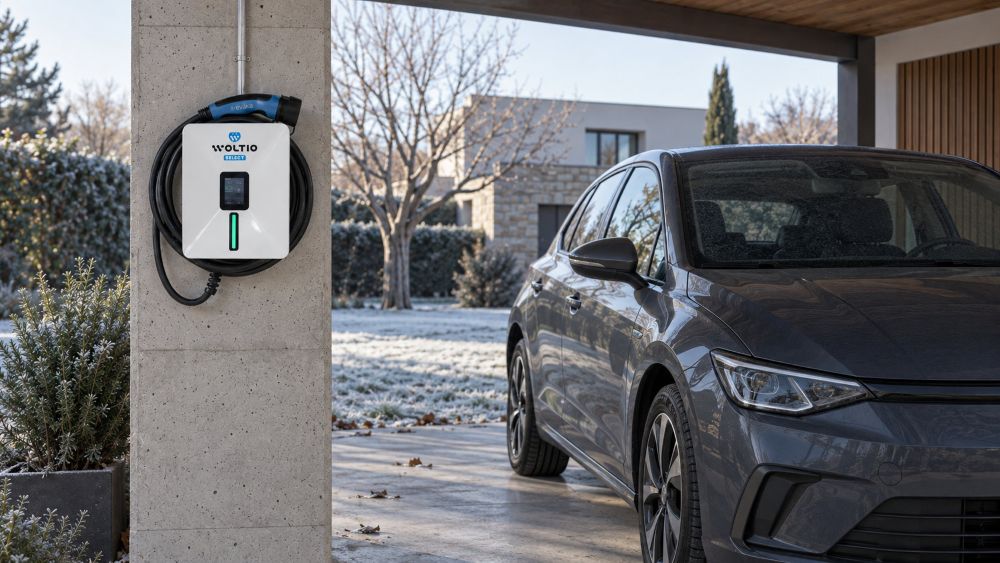
Each charger has an operating temperature range established by the manufacturer. You can check it in the manual or the model’s technical data sheet, along with the conditions specified for indoor or outdoor installation.
Protection against water and dust is expressed through the IP rating, but this information alone does not indicate the temperatures the equipment can withstand. These are different specifications, and both should be checked.
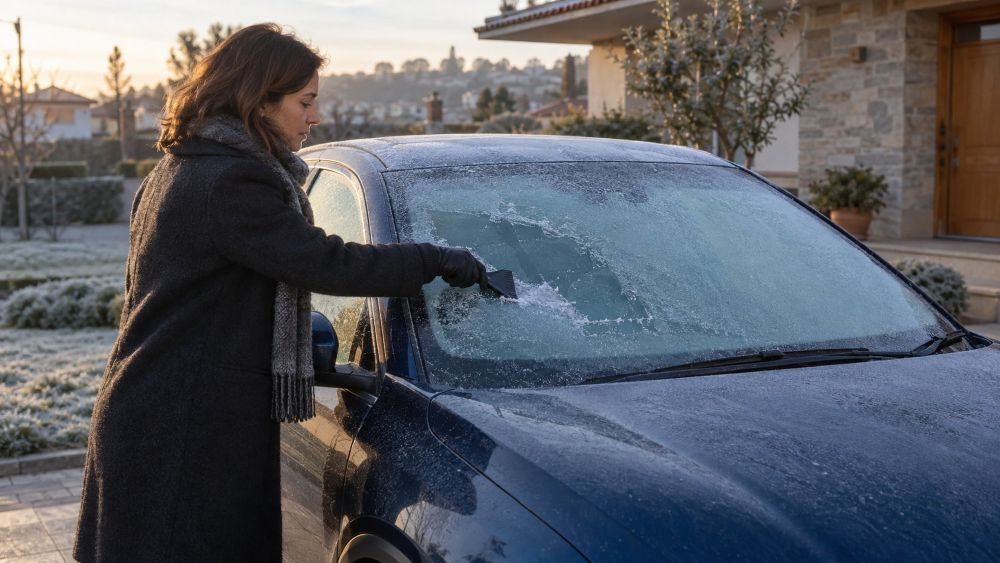
During a frost, also check the cable, connector and vehicle socket. If ice prevents you from connecting or unlocking the plug, follow the car manufacturer’s instructions. Avoid forcing it, inserting objects, or applying hot water or improvised heat sources, as they could damage the system.
A cracked cable, damaged connector or persistent error message requires professional inspection. Stop using the equipment if you notice damage, a burning smell, abnormal heating or any sign that could compromise safety.
In winter, it is advisable to schedule the session with enough time to reach the battery level you need before leaving. If the vehicle allows you to prepare the battery for a specific time, coordinate this function with the charging schedule.
Cabin climate control and battery preconditioning may be different functions. Activating the heating before getting into the car does not guarantee that the cells have also been warmed up. It will depend on the model and the selected settings.
Also check that the vehicle and charging point schedules are compatible. If the charger can supply energy from midnight, but the car is scheduled to start at three, the session will remain stopped until that time. Dynamic power management may also temporarily reduce charging when other household devices concentrate consumption.
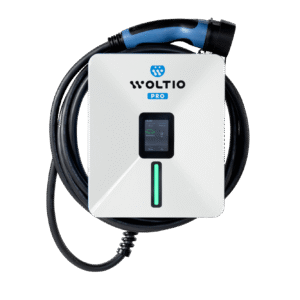
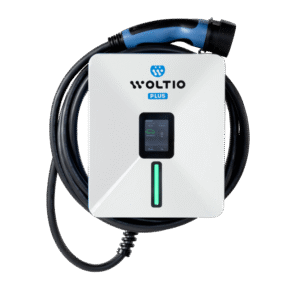
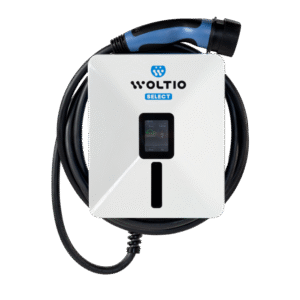
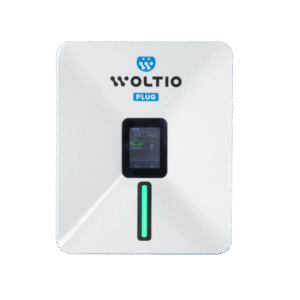
If you are considering different home electric car chargers, compare their power with your installation, the hours available for charging and the control functions you need. WOLTIO home models offer scheduling options, power regulation and compatibility with photovoltaic installations, depending on the equipment and accessories selected. Even so, the vehicle’s battery and onboard charger will continue to determine the power it can accept.
A slower session on an especially cold night may fall within expected operation. To assess whether there is an issue, note the approximate temperature, the initial battery percentage, the connection time, the observed power and any alerts displayed by the car or charger.
Compare similar charging sessions. A session from 20 to 60% does not behave the same as one close to the configured limit, because many vehicles reduce power as the battery fills up.
If the slow charging persists in mild temperatures, interruptions occur or charging does not start, follow these steps to find out what to do if your electric car will not charge. Checking the schedule, power supply, connector and equipment alerts can help identify the cause. When the fault persists or there is visible damage, a professional must intervene.