The popularity of electric cars continues to grow, and with it, the need to understand the different charging modes available, as not all are the same nor do they offer the same speed.
Knowing the difference between charging modes 1, 2, 3, and 4 is essential to get the most out of your vehicle and the charging point you use.
Charging mode 1 is the simplest system and, at present, also the least recommended for today’s electric vehicles. It involves direct charging from a conventional domestic socket, without any communication control between the car and the power grid.
This means that the vehicle is connected to the outlet using a standard cable, without additional protection or power control. The alternating current passes directly to the car’s internal charger, which can cause overheating, especially in older installations or outlets that are not designed to withstand high currents for several hours.
For this reason, Mode 1 is considered unsafe and is practically obsolete. It is usually reserved for electric bicycles, scooters, or small, lightweight electric vehicles, where the charging power is low. In the case of electric cars, manufacturers do not recommend or approve it as a standard charging method.
Mode 2 is an improvement on the previous mode, as it introduces a charging control system integrated into the cable itself. This system, known as ICCB (In-Cable Control Box), allows certain parameters to be communicated between the car and the grid, offering an additional level of safety.
Although it also uses a domestic power outlet, the control built into the cable allows the intensity to be regulated and prevents overloads. However, the charging speed remains low. In most cases, this is slow charging in alternating current (AC), with a power output of between 2.3 kW and 3.7 kW, which means charging times that can exceed 8 or 10 hours for a full battery.
Mode 2 is often used as a temporary or emergency solution, for example, during a trip or when a dedicated charging point is not available.
Although it is safer than Mode 1, it is not intended for continuous daily use either.
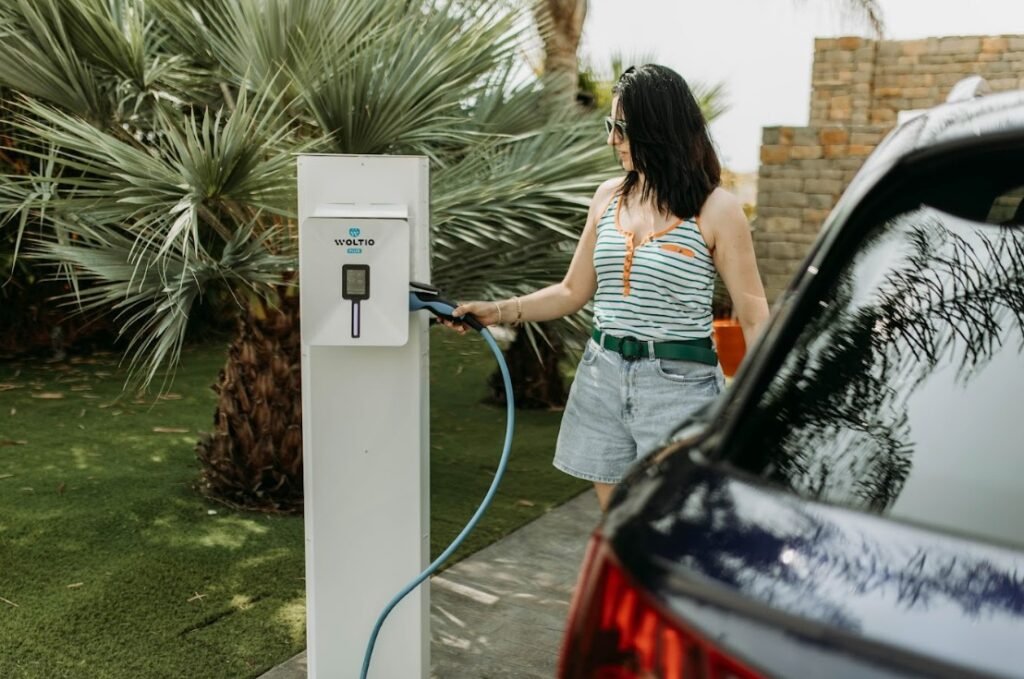
Mode 3 is currently the most widely used among electric car users, especially for home charging or in private and public parking lots.
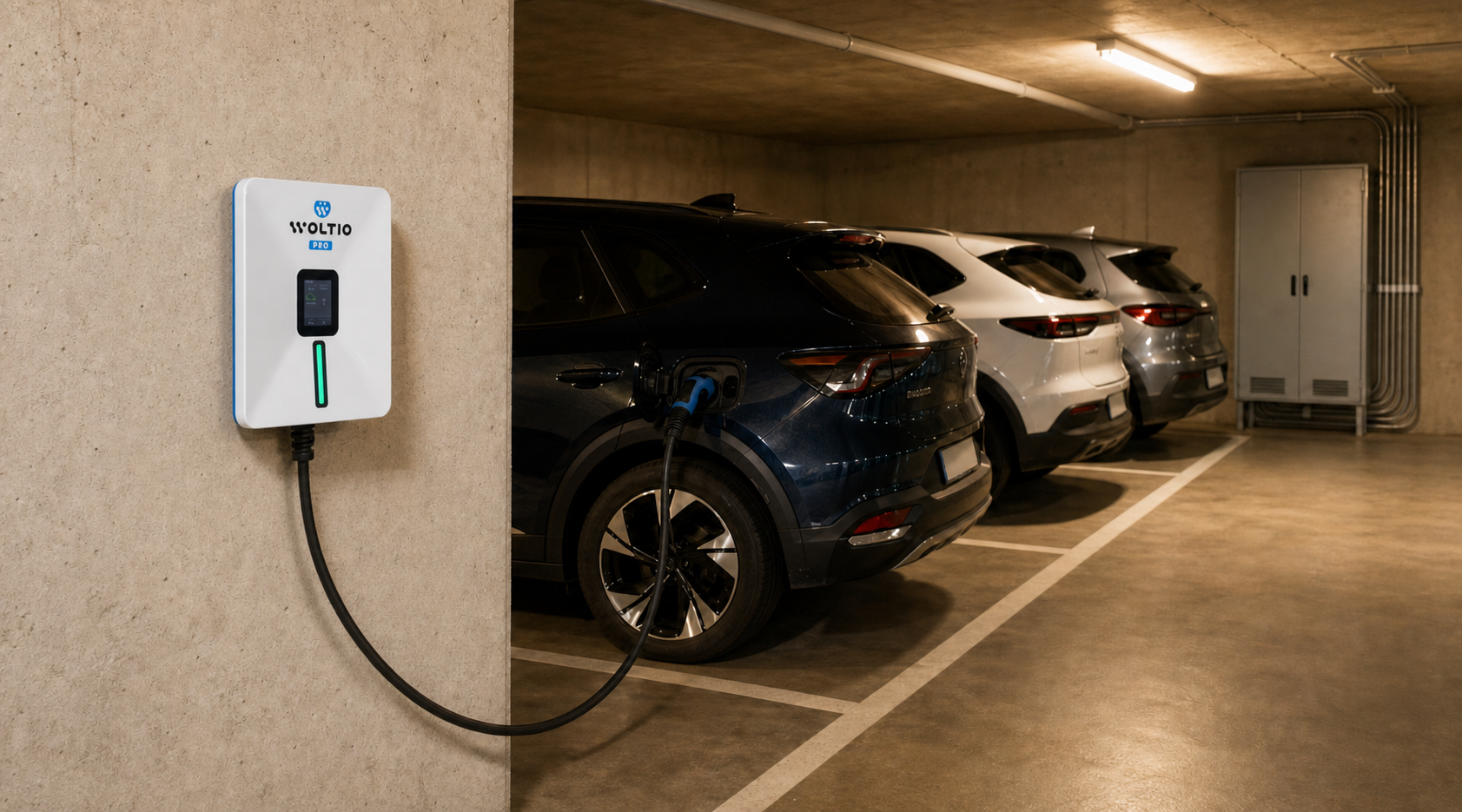
This system uses a specific charging point (wallbox), which establishes direct communication with the vehicle and ensures total control of the process.
Unlike the previous modes, mode 3 incorporates electrical protections, current control, and error detection systems. It also uses the Type 2 connector, the most common European standard, which is compatible with most models on the market.
Charging is carried out using alternating current (AC), but at much higher power levels, ranging from 3.7 kW to 22 kW, depending on the electrical installation and the charger. This allows a full battery to be recharged in a few hours, making it a practical and safe option for both domestic and professional use.
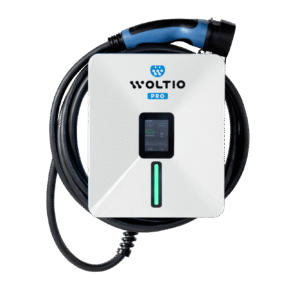
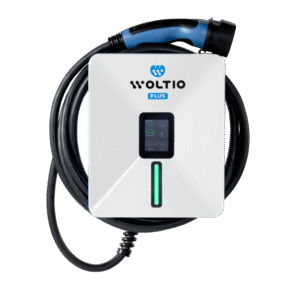
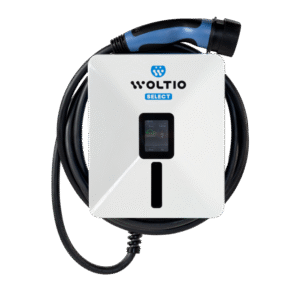
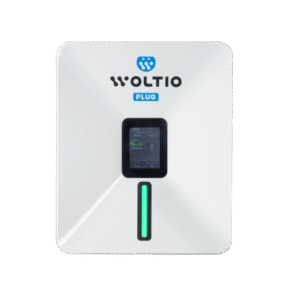
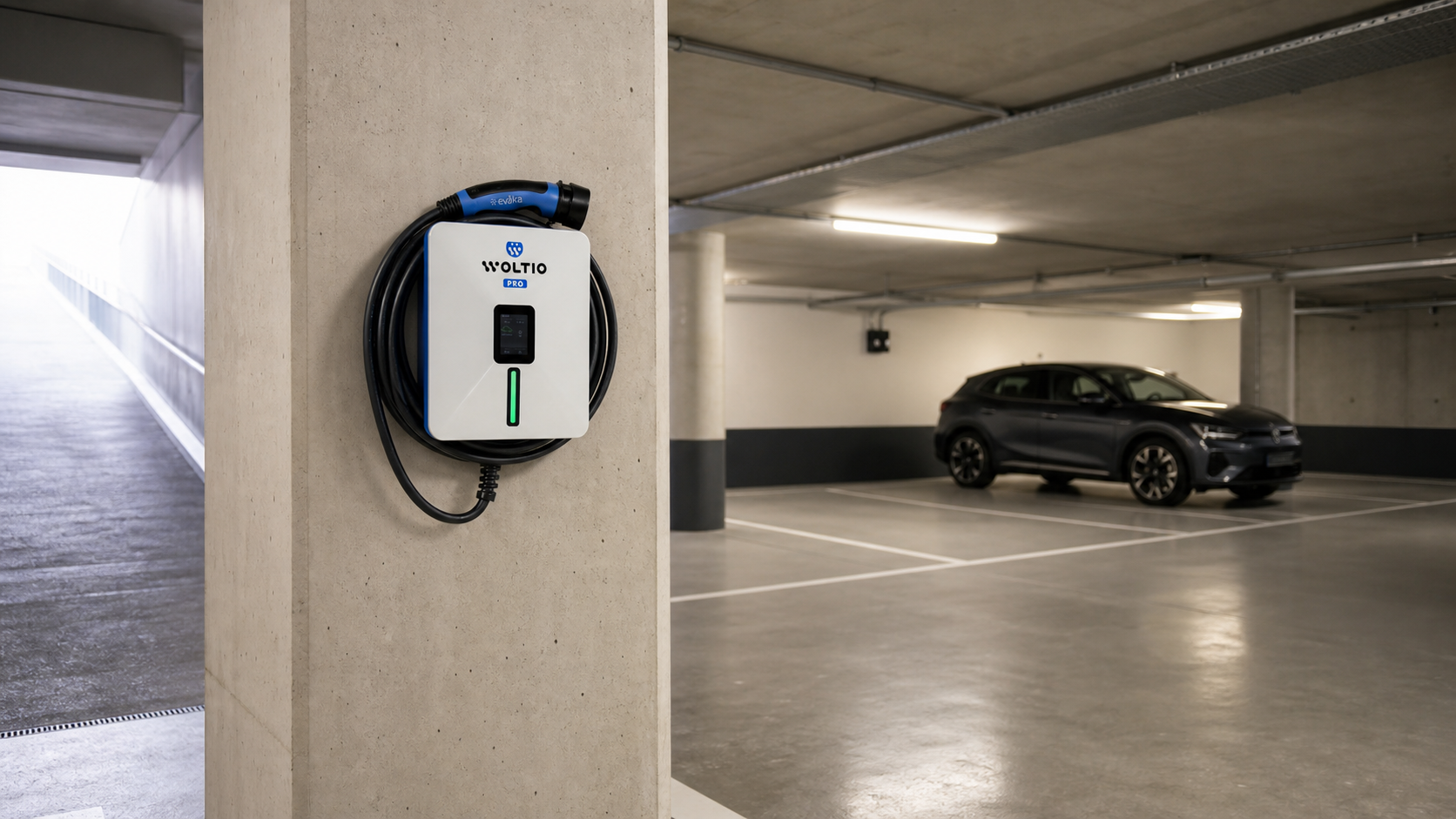
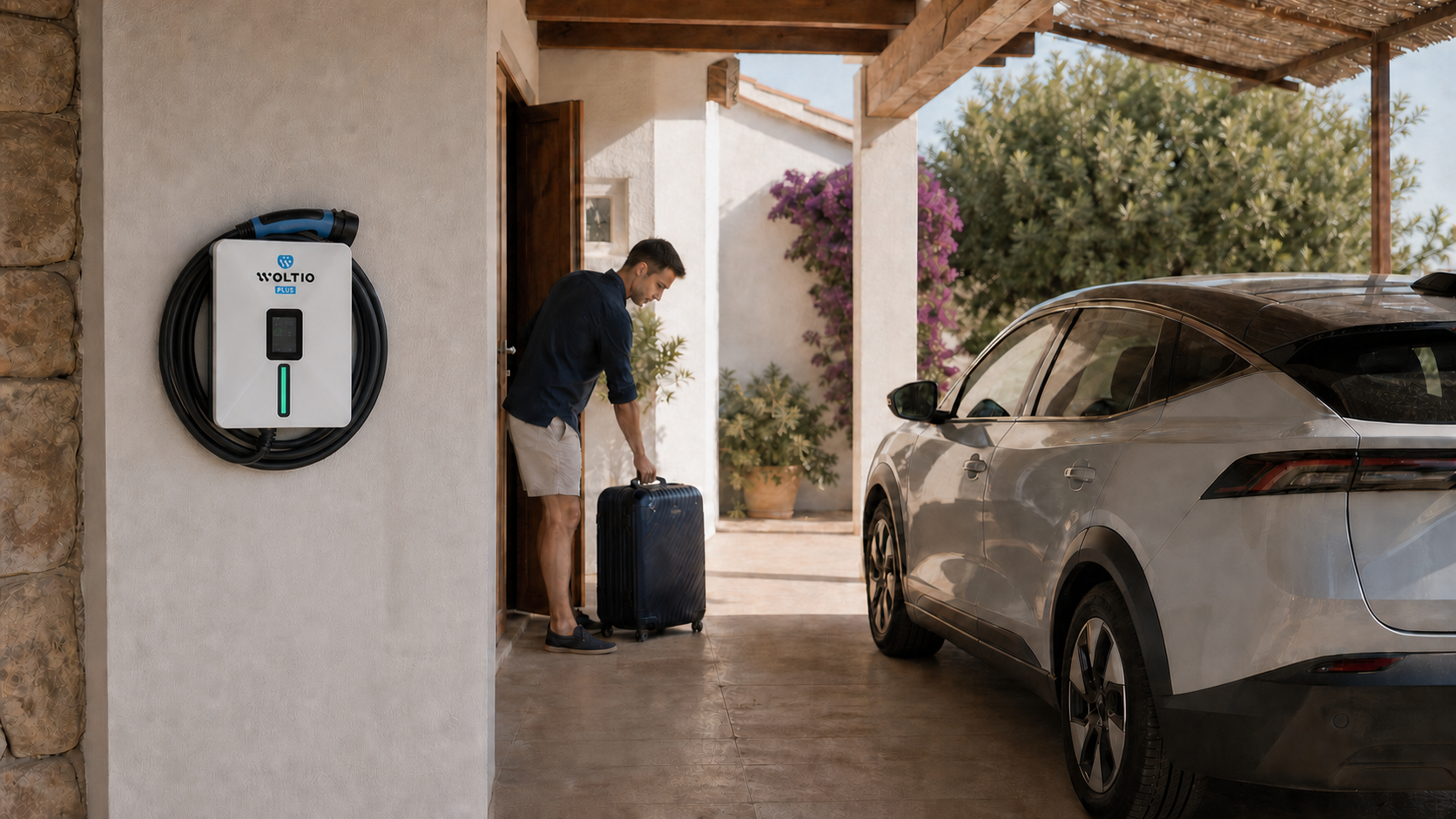
The WOLTIO PRO, WOLTIO PLUS, and WOLTIO SELECT models are examples of chargers designed to operate in Mode 3, with the advantage of being universal and compatible with all electric and plug-in hybrid cars that use a Type 2 connector.
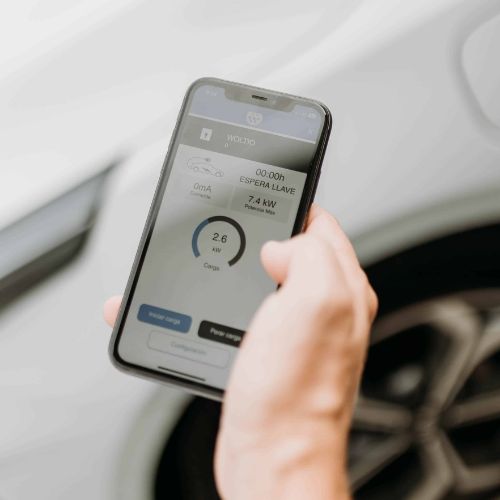
In addition, the WOLTIO app allows you to schedule charging times, monitor consumption, or adjust power in real time, facilitating smart and efficient energy management.
Thanks to these features, Mode 3 is considered the ideal standard for most users, as it combines safety, speed, and versatility.
Learn more about our range of chargers for electric cars and plug-in hybrids.
Mode 4 corresponds to direct current (DC) charging, which is used by fast or ultra-fast charging points usually found at service stations, rest areas, or electric charging stations.
In this case, the charger does not rely on the car’s internal system to transform the current, but has an external power converter that supplies energy directly to the battery. This allows very high power levels to be achieved, from 50 kW to over 350 kW, which translates into 80% recharges in less than 30 minutes.
The connector used may vary depending on the vehicle standard (CCS, CHAdeMO, etc.), and always requires a specific charging point equipped for direct current.
Mode 4 is preferred for charging on the road or during long trips, where the aim is to minimize waiting time. However, it is not intended for everyday use at home, as its infrastructure is more complex and its installation and maintenance costs are much higher.
Although WOLTIO home chargers are designed for Mode 3, their smart technology allows you to get the most out of this type of charging, adapting the available power and optimizing each charging session in complete safety.
Broadly speaking, we can say that mode 3 is best for everyday use, with the option of using mode 4 (if compatible) in emergencies when you need to recharge quickly.
In short, what you need to know is:
• If you need a quick solution during a trip, mode 4 is the most suitable option.
• If you are looking for safe, efficient, and economical charging for your daily life, mode 3 is undoubtedly the most recommended.
• Modes 1 and 2 can be used occasionally, but they do not offer the safety guarantees or speed required for regular use of an electric car.